RITA on Alibaba





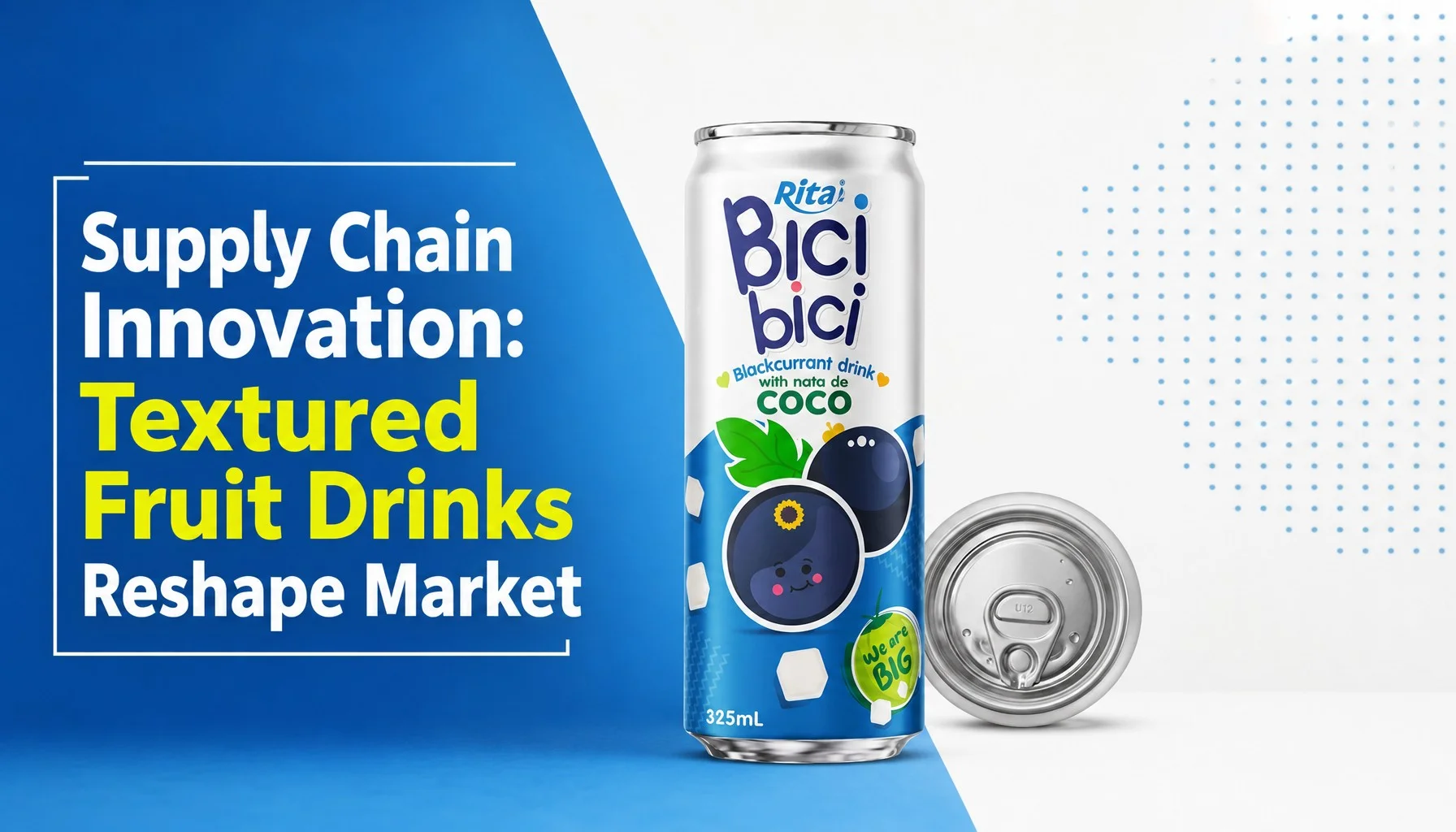
The global beverage industry is witnessing a paradigm shift as textured drinks—beverages containing chewy, edible inclusions—gain traction among consumers seeking novel sensory experiences. Unlike traditional smooth liquids, these products offer a multi-textural mouthfeel that transforms drinking into an interactive moment.
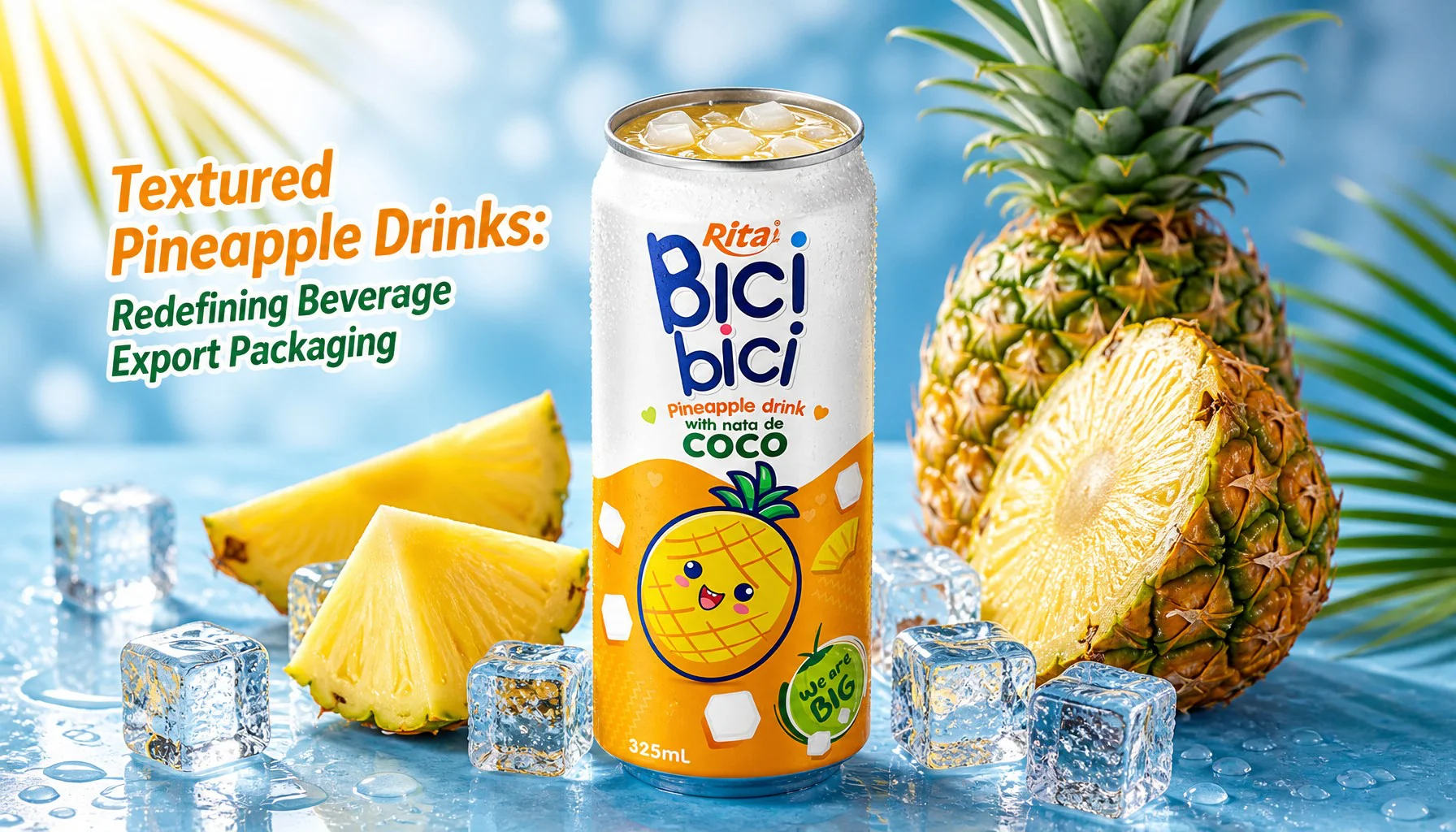
At the forefront of this trend is the Bici Bici 325ml Blackcurrant Drink with Nata de Coco (Wide Opening Can), a ready-to-drink innovation that marries tart blackcurrant flavor with large, chewy nata de coco cubes. This article examines the supply chain dynamics that make such products possible, from raw material sourcing in Vietnam to packaging breakthroughs and UK market entry.
Key Takeaways
- Textured beverages are a fast-growing segment, driven by demand for unique mouthfeel and interactive consumption.
- Supply chain efficiency—from coconut farms to advanced manufacturing—is critical for delivering consistent nata de coco quality.
- Wide opening aluminium cans solve the long-standing challenge of packaging drinks with solid inclusions.
- UK retailers can leverage distinctive packaging for shelf differentiation and meal deal integration.
The Rise of Nata de Coco in Beverages
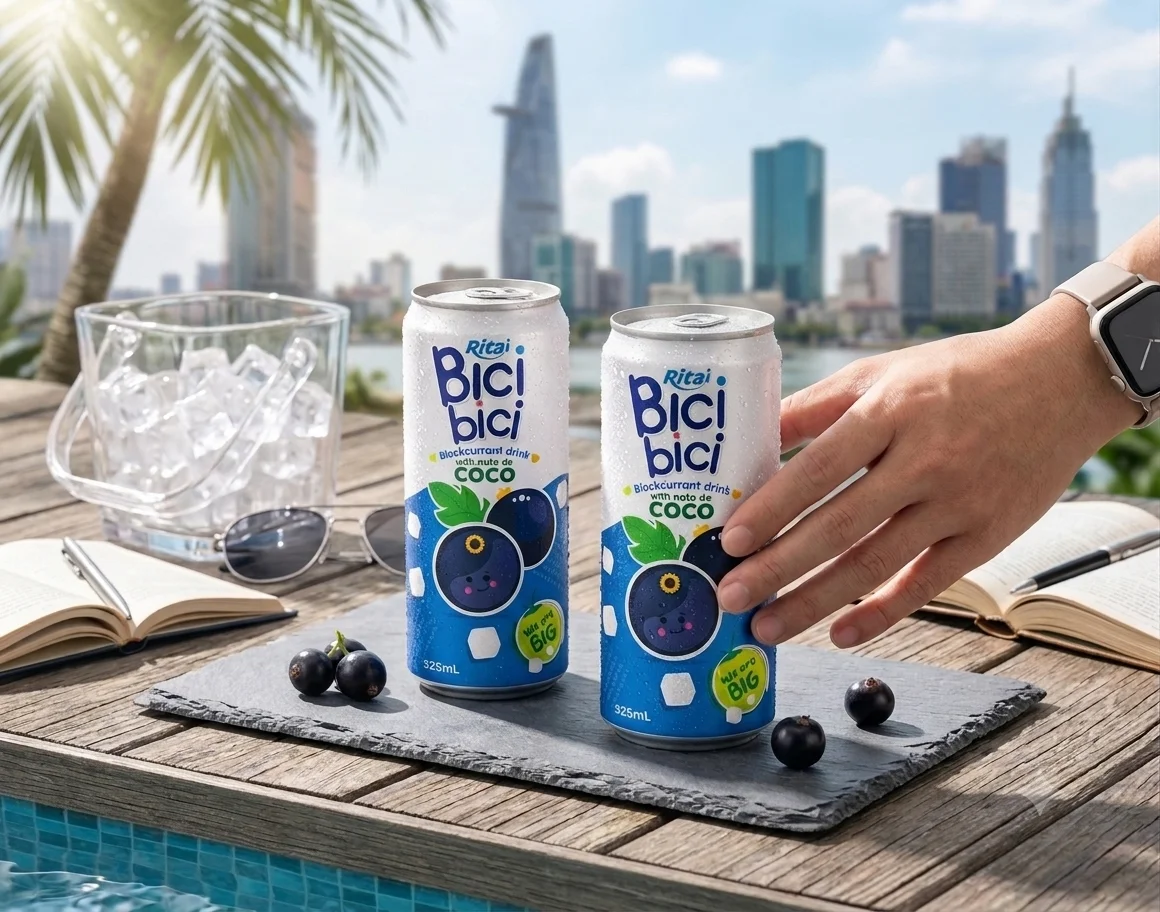
Nata de coco, a chewy, translucent gel produced by fermenting coconut water, has long been a staple in Asian desserts and drinks. Its neutral taste and springy texture make it an ideal carrier for fruit flavors. Over the past decade, global beverage brands have incorporated nata de coco into juices, teas, and carbonated drinks, capitalizing on its perceived natural origin and textural contrast.
From Coconut Water to Chewy Cubes
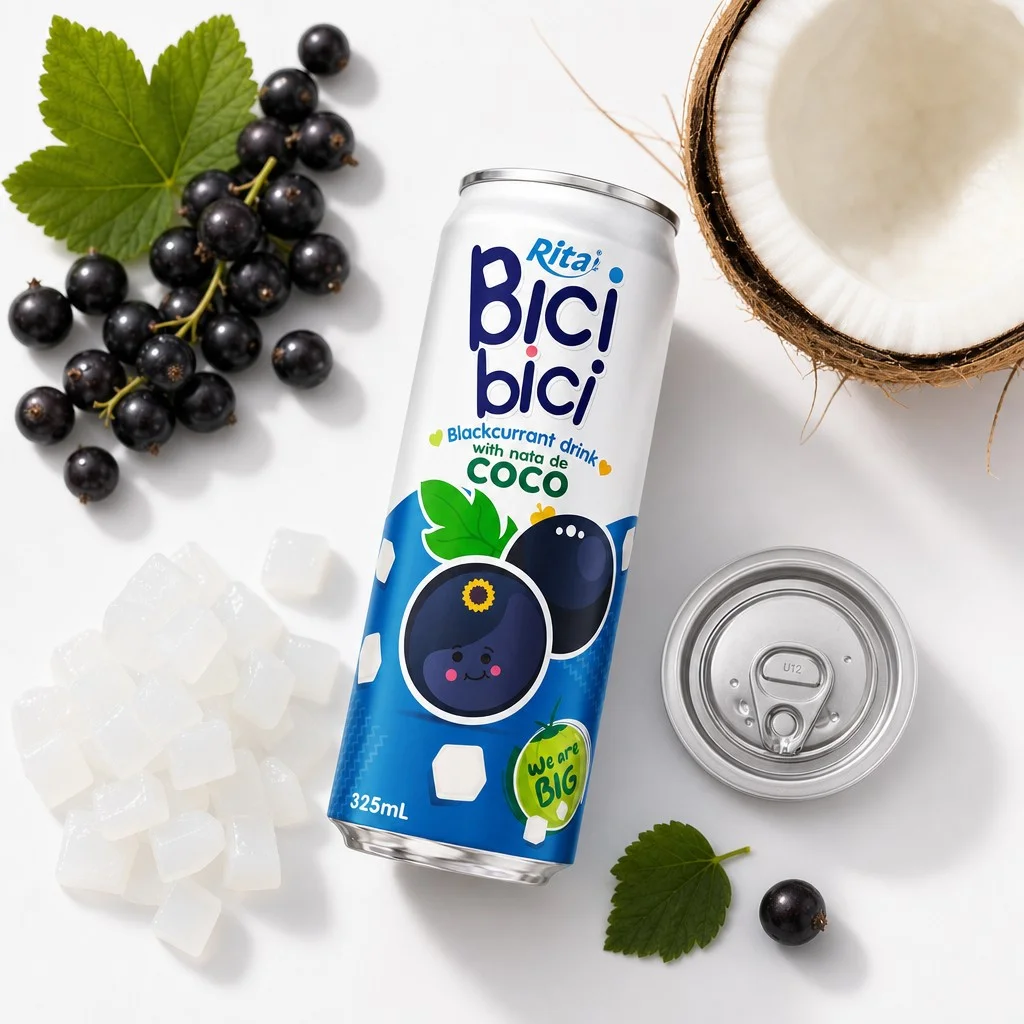
The production of nata de coco begins with fresh coconut water sourced from mature coconuts. In Vietnam's Mekong Delta, coconut farms provide the raw material for large-scale fermentation. The process involves bacterial culture that converts the coconut water's sugars into cellulose, forming a firm, white gel. After washing and cutting into uniform cubes, the nata de coco is pasteurised and infused with fruit syrups or natural flavorings. The Bici Bici Blackcurrant Drink with Nata de Coco uses big-size cubes to deliver a satisfying chew with every sip.
Consumer Appeal of Textured Drinks
Market research indicates that younger demographics, particularly Gen Z and millennials, are drawn to beverages that offer more than just hydration. The 'eating-drinking' hybrid category—also known as 'functional indulgence'—is growing at 8% annually in the UK. Textured drinks tap into the desire for playful, Instagrammable products. The Bici Bici can, with its cartoon blackcurrant character and slogan "We are BIG," directly appeals to this impulse-buy mindset. Retailers in England, Scotland, Wales, and Northern Ireland are increasingly allocating shelf space to such innovative SKUs.
Sourcing and Production: The Supply Chain Behind Bici Bici
Delivering a consistent, high-quality textured drink requires a tightly integrated supply chain. RITA Food and Drink Co., Ltd., the manufacturer behind the Bici Bici brand, operates 50+ automated production lines and exports to over 180 countries. The company's supply chain begins with raw material sourcing from Vietnamese farms.
For the nata de coco component, RITA relies on coconut farms in Ben Tre province, a region renowned for its coconut water quality. The farm-to-factory journey is documented in a dedicated video that showcases the sustainable harvesting practices.
https://www.youtube.com/watch?v=I7hlTL3FT_0
The coconut water is fermented in controlled environments to produce nata de coco cubes of uniform size and texture. Simultaneously, blackcurrant juice concentrate is sourced from international suppliers known for consistent quality. The blending process combines the fruit base with sugar, citric acid, and natural flavorings to achieve a Brix level around 9.4° and a calorie count of approximately 38 kcal per 100ml, appealing to health-conscious consumers without making explicit health claims.
Manufacturing Excellence
RITA's production facilities hold globally recognized certifications including BRC, FSSC 22000, Halal Jakim, Halal HCA-GCC, Kosher, ISO, GMP, HACCP, and SMETA. This enables the company to serve private label and OEM/ODM clients across the UK and beyond. The coconut products line includes nata de coco-based beverages, coconut water, and coconut milk drinks, all produced under stringent quality controls. For the Bici Bici product, the wide opening aluminium can is a key innovation: the fully removable top transforms the can into a drinking cup, allowing the large nata de coco cubes to pass through effortlessly—a solution to the traditional can's limitation.
Packaging Innovation: Wide Opening Cans
The packaging of textured beverages has historically been a pain point. Standard pull-tab cans cannot accommodate solid inclusions larger than a few millimetres, forcing brands to use plastic bottles or pouches. RITA's wide opening can, with a 325ml capacity, addresses this challenge directly.
Solving the Texture Delivery Challenge
The fully removable top is made from food-grade aluminium and features a white-and-blue design with stylized blackcurrant characters. The wide opening ensures that the nata de coco pieces, which are approximately 1cm³, can be consumed without clogging. This design also enhances the drinking experience, as consumers can see and access the cubes easily. The can's compact size fits standard cup holders, backpacks, and office desks, making it ideal for on-the-go consumption.
Shelf Differentiation
In the crowded UK soft drinks aisle, packaging is a critical differentiator. The Bici Bici can's playful aesthetic, with its green leaf icon and 'NEW PACKING' badge, stands out against traditional juice cans. Retailers can position it in chilled display units or as part of meal deals, aligning with single-serve pricing tiers. The fruit juice catalog at RITA includes multiple SKUs with similar innovative packaging, offering buyers a range of options for textured beverages.
Market Expansion and Distribution in the UK
The UK is a key target market for RITA's textured drink range. With a growing appetite for exotic fruit flavors and novel textures, British consumers have embraced products like bubble tea and coconut jelly drinks. Bici Bici enters this space with a familiar blackcurrant flavor—a staple in the UK—combined with the novelty of nata de coco.
Retail Opportunities
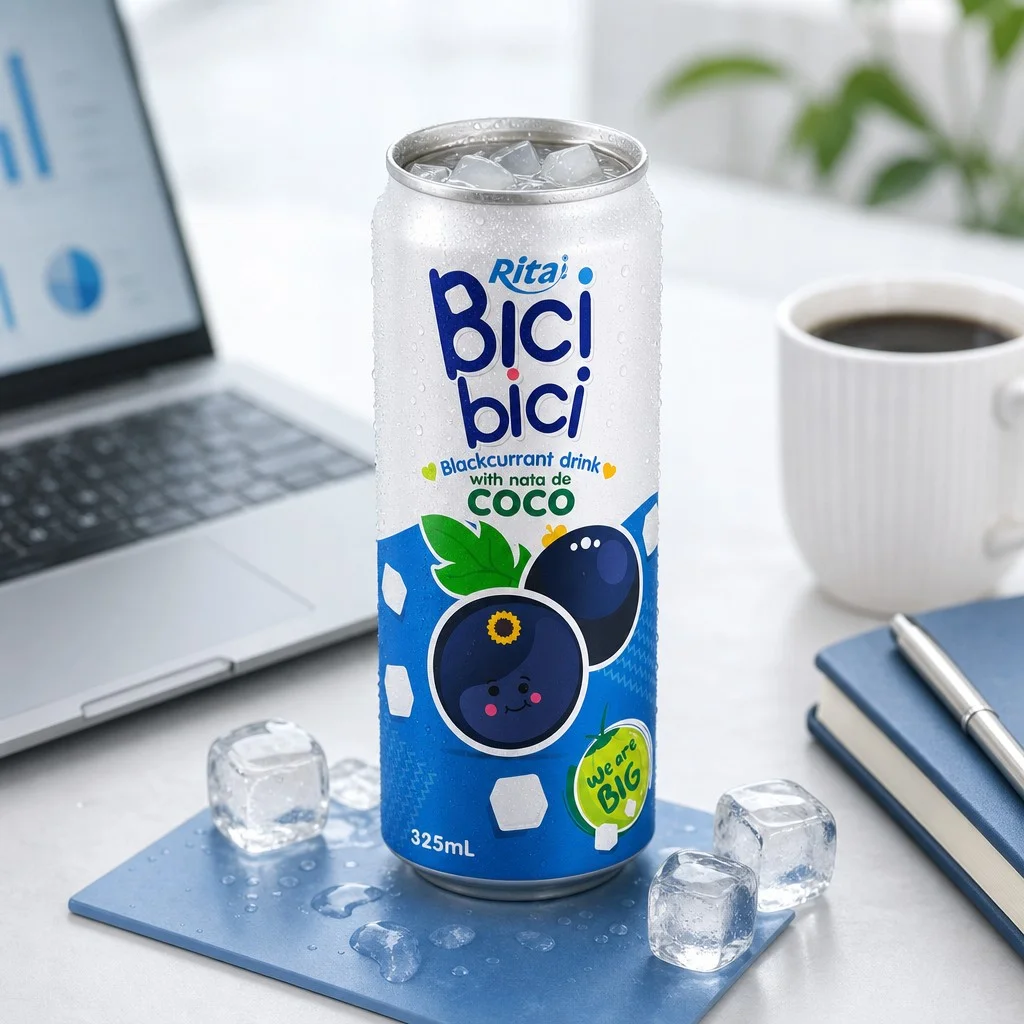
For UK retailers, the product offers a clear point of difference. Convenience stores, supermarkets, and vending machine operators can leverage the compact can's portability. The product's low-calorie profile (approx. 38 kcal per 100ml) and high fiber content from nata de coco resonate with the health-conscious segment without requiring functional claims. The Bici Bici 325ml Blackcurrant Drink with Nata de Coco is positioned as an affordable indulgence, suitable for lunchtime breaks, casual gatherings, and impulse purchases.
Consumer Trends
Data from Kantar and Nielsen shows that the UK's 'better-for-you' beverage segment grew by 12% in 2024, with textured drinks capturing a disproportionate share of that growth. The rise of 'drinkable snacks' is a direct response to busy lifestyles—consumers want to eat and drink simultaneously without compromising on taste. Bici Bici fits this trend perfectly, offering a satisfying chew without requiring a spoon.
Frequently Asked Questions
What makes the Bici Bici can different from regular cans?
The wide opening can has a fully removable top, turning the can into a cup. This allows large nata de coco cubes to be consumed easily, unlike traditional small-tab cans.
Is Bici Bici suitable for vegans?
Yes, the ingredients—water, fruit juice concentrate, sugar, citric acid, natural flavoring, and nata de coco—are plant-based. The product does not contain animal-derived ingredients.
Where is Bici Bici manufactured?
It is manufactured by RITA Food and Drink Co., Ltd. in Vietnam, using coconut water sourced from Ben Tre farms and blackcurrant concentrate from international suppliers.
What is the shelf life of the product?
The aluminium can provides a shelf life of 12-18 months when stored in a cool, dry place. Once opened, it should be consumed immediately.
Can retailers order Bici Bici for meal deals?
Yes, the 325ml size fits standard UK single-serve pricing tiers. Retailers can contact RITA for wholesale pricing and distribution in England, Scotland, Wales, and Northern Ireland.
This article is for informational purposes and does not constitute health or medical advice. Product specifications may vary. Always check the label for the most current ingredient and nutritional information.