RITA on Alibaba





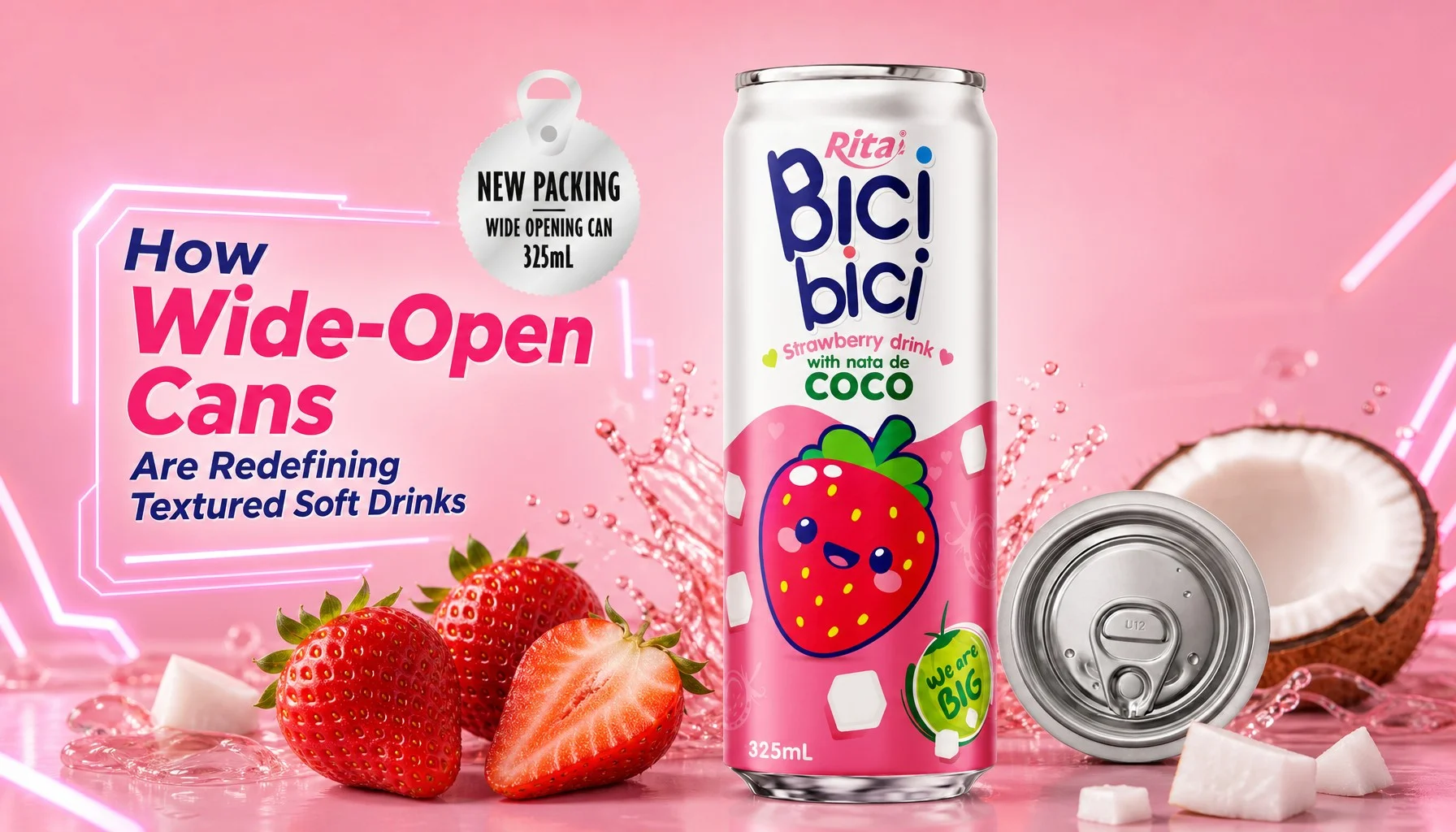
The soft drinks aisle has entered a new phase where what a drink does in the mouth matters as much as what it tastes like. Texture, portion size and packaging format are now decisive factors in how consumers choose a beverage.
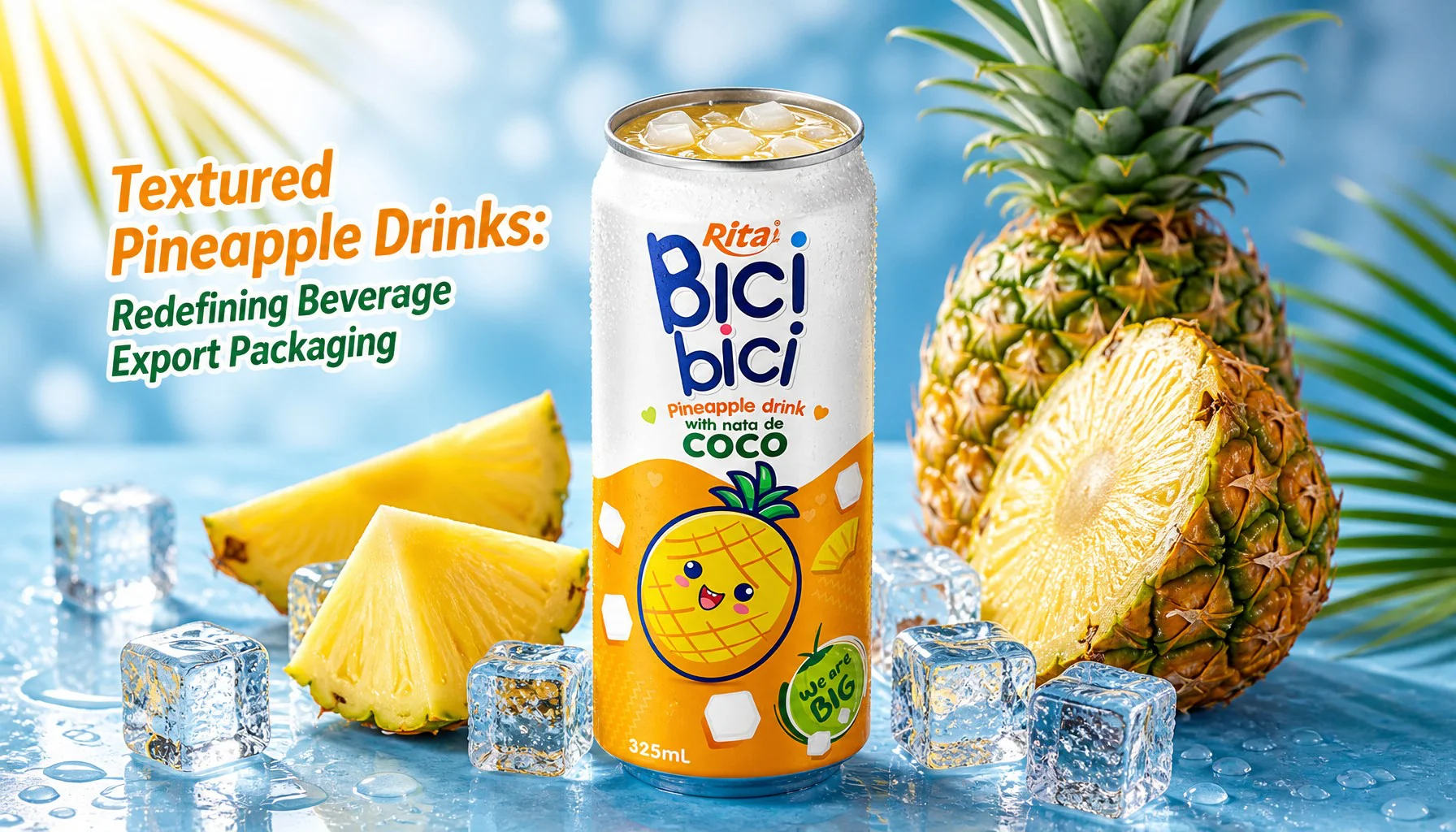
Among the newest formats drawing attention is the Bici Bici strawberry drink with nata de coco, a fruit-flavoured beverage that pairs sweet strawberry notes with chewy coconut gel cubes. For UK buyers and retail professionals exploring innovation in convenience packaging, this product shows how texture can turn a simple refreshment into a multi-sensory experience.
Available in a 325ml wide-opening aluminium can, the drink is a practical example of how beverage manufacturers are experimenting with form and function. The format, developed by RITA Food & Drink Co., Ltd., is now part of a broader conversation about textured soft drinks, portable formats and the changing expectations of modern consumers.
Key Takeaways
- The wide-opening can format answers demand for drinks that can be consumed on the move without extra cups or utensils.
- Nata de coco adds a chewy texture that differentiates fruit drinks in crowded retail shelves.
- Aluminium cans remain a lightweight, recyclable format for flavoured soft drinks and juice-based beverages.
- Vietnam has become a significant sourcing destination for tropical fruit juices and coconut-based drink innovation.
The Rise of Texture in the UK Soft Drinks Market
Consumer interest in distinctive mouthfeel has grown steadily across the UK and European beverage markets. Once limited to bubble tea shops, chewy inclusions such as nata de coco, tapioca pearls and fruit pieces are now appearing in canned and bottled products.
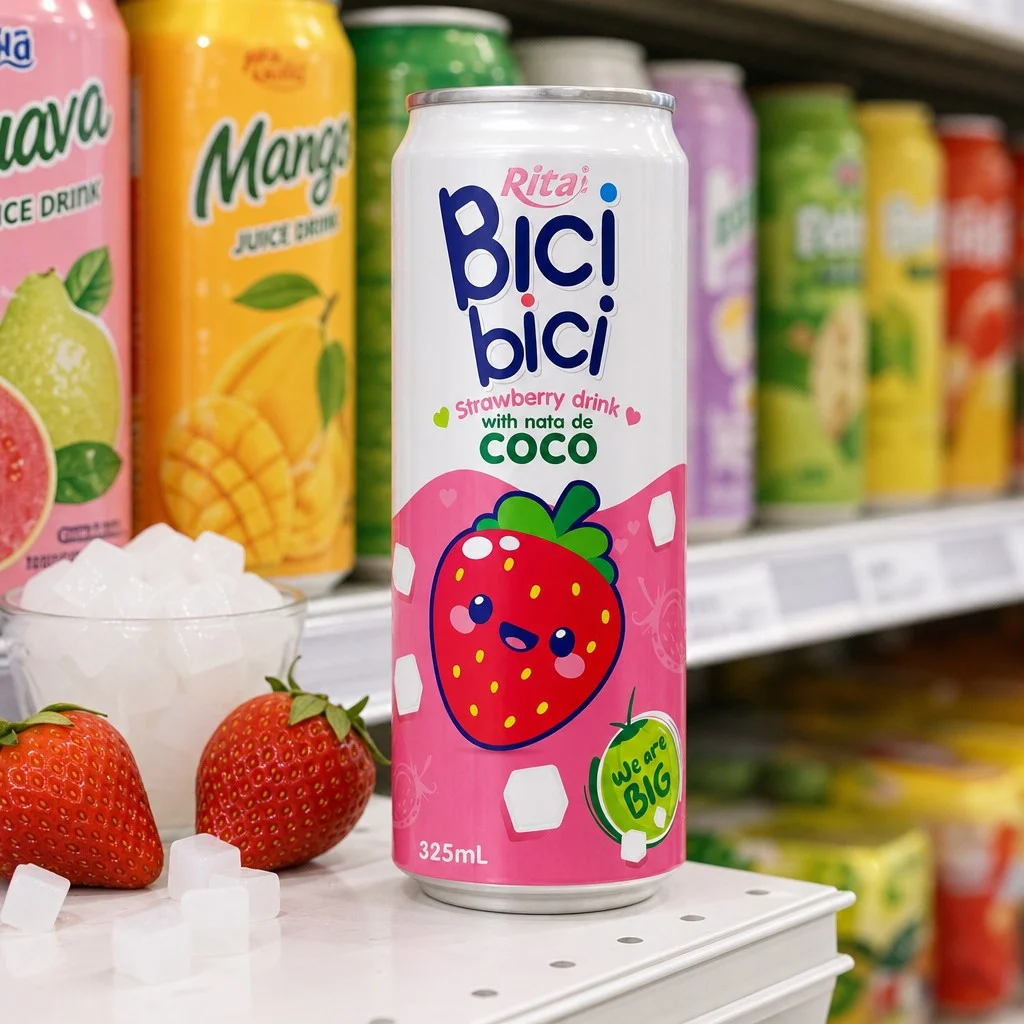
Texture adds an element of novelty. For shoppers, the sensation of chewing while drinking breaks the monotony of standard carbonated drinks and juices.
The Bici Bici strawberry drink with nata de coco fits this trend by delivering a familiar flavour with an unexpected layer. Strawberry juice provides a sweet, fragrant base, while generous nata de coco pieces add a lightly firmer, jelly-like bite.
Retailers are taking notice. The segment is ripe for fruit juice innovation, and formats like this can act as a trial benchmark. Positioned alongside mainstream fruit juice drinks, this format gives convenience stores and supermarkets a point of difference in the chilled and ambient drinks sections. The visual contrast of red strawberry liquid with white coconut cubes also makes the product easy to spot on shelf.
Key drivers behind the shift towards textured beverages include:
- Growing demand for indulgent, multi-sensory experiences in everyday drinks.
- Portable formats that suit busy working hours, commuting and travel.
- Novelty packaging that creates social media moments and brand visibility.
- Supplier capability in producing stable drinks with chewable inclusions at scale.
Packaging Innovation: The Wide-Opening Can Experience
Packaging engineering has become a central tool for beverage brands looking to create differentiation. The Bici Bici strawberry drink with nata de coco uses a fully openable lid instead of the traditional small sip hole.
This wide-opening 325ml aluminium can transforms into a drinking cup. Consumers can peel back the entire lid, sip directly from the can, or use a spoon to enjoy the nata de coco pieces at the bottom. The design eliminates the need for additional tableware and makes the product more practical for outdoor events, office lunch breaks and road trips.
The can’s visual identity reinforces its playful positioning. A cartoon strawberry character, pink background and green "we are BIG" badge appear on the label, while the separate depiction of the pull-tab lid highlights the wide-opening feature. For retailers, the format is easy to recognise and easy to explain to customers.
Inside the Bici Bici Strawberry Drink with Nata de Coco
One of the overlooked advantages of wide-opening cans is their usability. Nata de coco pieces are larger than the small opening on a typical beverage can, which often makes them difficult to reach. For a nata de coco drink, this opening makes all the difference. By opening the full top, the product becomes far easier to finish.
This is particularly relevant for consumers who want a drink and a snack in one package. Instead of opening a can and searching for a spoon, they can simply peel, sip and scoop. The product thus solves a real consumption friction point.
A Can That Keeps Up with Modern Lifestyles
The format also aligns with a broader conversation about convenience and waste. Lightweight aluminium cans are easily transported, stack efficiently and remain one of the most established recyclable packaging types in Europe. While some markets debate deposit return schemes and packaging regulations, formats that combine portability with material efficiency continue to attract attention.
Beverage producers are increasingly asked to balance sustainability, cost and user experience. A wide-opening can meets all three criteria without custom sipping devices or secondary plastic lids.
From Vietnamese Farms to Global Shelves: Ingredient Sourcing
In the coconut drink UK segment, the origin of ingredients is as important as the packaging. The nata de coco used in this drink is produced from coconut water and coconut meat, both of which are abundant in Vietnam’s tropical regions.
RITA works with established coconut sources, including its Ben Tre coconut farm. This region has long been associated with high-quality coconut products, from fresh coconut water to coconut-derived ingredients used in desserts and beverages.
The strawberry juice component reflects the wider fruit-sourcing network that connects Vietnamese growers with international beverage markets. For tropical fruits and related ingredients, RITA relies on orchards across the country, including source orchards across the Mekong Delta, to maintain a stable supply of fruit-based raw materials.
https://www.youtube.com/watch?v=I7hlTL3FT_0
The Exporter’s Perspective: Why Global Brands Choose Vietnam
Vietnam has evolved into a major production hub for fruit juices, coconut drinks and functional beverages. RITA Food & Drink Co., Ltd., established in 2004, is among the manufacturers driving this shift with its OEM and ODM capabilities. As an OEM beverage supplier, the company offers flexible development pathways for international brands.
With more than 50 automated production lines and monthly exports exceeding 1,200 containers, RITA beverage manufacturer supplies branded products to more than 180 countries. The company’s certifications, including BRC, FSSC 22000, Halal, Kosher, ISO, GMP, HACCP and SMETA, help international buyers meet quality and compliance requirements.
For UK wholesalers and private-label developers, working with a Vietnamese partner means access to tropical fruit expertise and competitive production costs, as well as flexible packaging formats such as aluminium cans, PET bottles and glass bottles. The coconut water range and the wider fruit juice portfolio give retailers several entry points into the Southeast Asian beverage supply chain.
Why Format Flexibility Matters for Retailers and Consumers
Format choice is becoming a key element of retail strategy. As shopper habits change, brands are looking for pack sizes and opening mechanisms that suit different consumption occasions.
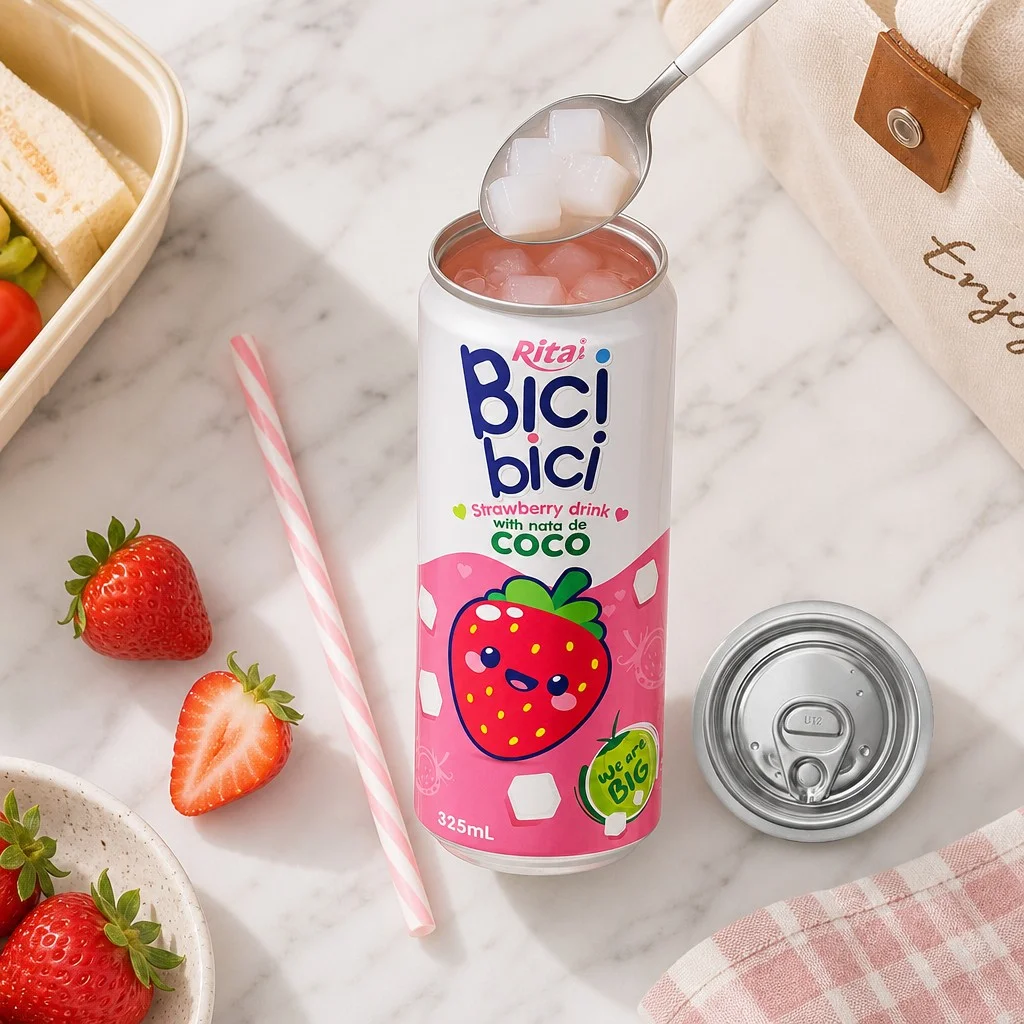
The 325ml capacity is positioned between single-serve juice cartons and larger shareable bottles. It works well as an individual snack or accompaniment to lunch. For retailers, the wide-opening aluminium can takes up less shelf space than a bottle with a cap and offers a cleaner visual block when displayed.
The product also opens a conversation about product expansion. A can format with chewable inclusions can be adapted to other fruit flavours, coconut-based recipes or dessert-style drinks, giving importers and private-label buyers room to differentiate their ranges. The Bici Bici strawberry drink with nata de coco is one such example of a format that brands can build upon.
For businesses evaluating supplier options, the ability to customise packaging and ingredients is critical. RITA’s private-label support spans recipe development, package design and production scale, which reduces the complexity of launching a textured soft drink in the UK market.
Wide-Opening Cans and the Bici Bici Strawberry Drink with Nata de Coco
Retailers seeking a point of difference are looking beyond traditional bottles. For a textured beverage, a wide opening can works better than a small sip hole, because it allows the full product to be experienced from the first sip to the last spoonful.
For UK importers, this format can be adapted to different flavour profiles and branding requirements. The same manufacturing approach that produces the strawberry drink can be used to create other textured fruit beverages with nata de coco, aloe vera or basil seeds.
A Look Ahead: Textures, Formats and Growth Potential
The soft drinks category is no longer defined solely by carbonation and sugar content. Texture, format and visual appeal now influence purchasing decisions across age groups.
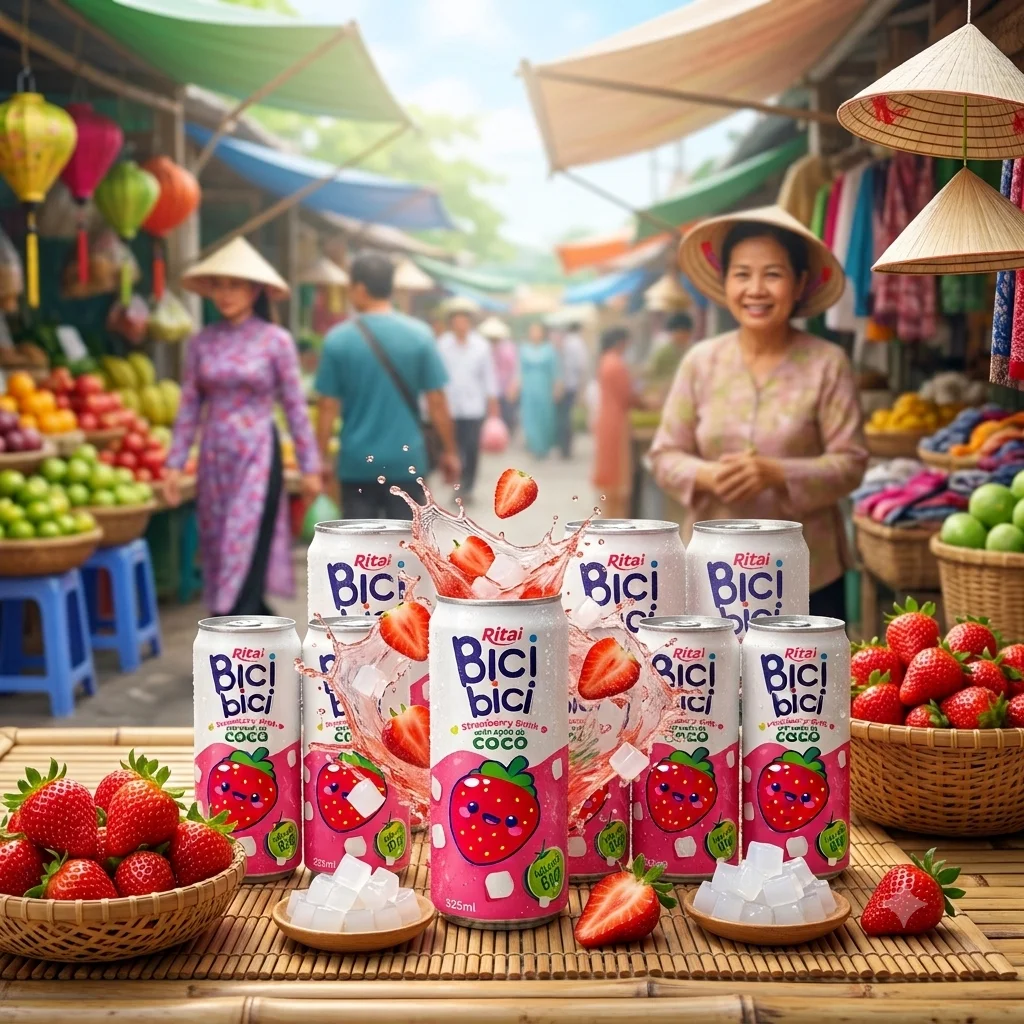
Wide-opening cans address a practical need, while nata de coco provides the sensory difference that makes a product memorable. Combining the two gives importers a straightforward way to enter the textured beverage segment without requiring consumers to learn a new consumption ritual.
As international trade shows and retail buyers look for the next wave of packaged drinks, products that blend tropical ingredients with functional packaging will continue to stand out. The Bici Bici strawberry drink with nata de coco is one example of how suppliers are responding to that demand.
For UK companies, the opportunity lies in sourcing from manufacturers that can deliver both product innovation and supply-chain reliability, a combination that RITA has built over two decades of international beverage production.
Frequently Asked Questions
What is nata de coco?
Nata de coco is a chewy, jelly-like ingredient made from fermented coconut water. It is commonly used in drinks and desserts across Southeast Asia for its unique texture.
What makes a wide-opening can different?
A wide-opening can features a lid that can be fully removed, turning the container into a cup. This makes it easier to consume drinks containing larger pieces such as fruit or nata de coco.
Is this drink available for private label in the UK?
RITA Food & Drink Co., Ltd. offers OEM and ODM services for beverage brands, including fruit juices, coconut drinks and textured soft drinks. UK importers can work with RITA to develop customised formats and flavours.
Where can UK businesses learn more about RITA’s beverage range?
UK businesses can explore the fruit juice portfolio at ritadrinks.co.uk, which includes the Bici Bici range and other canned fruit beverages.