RITA on Alibaba




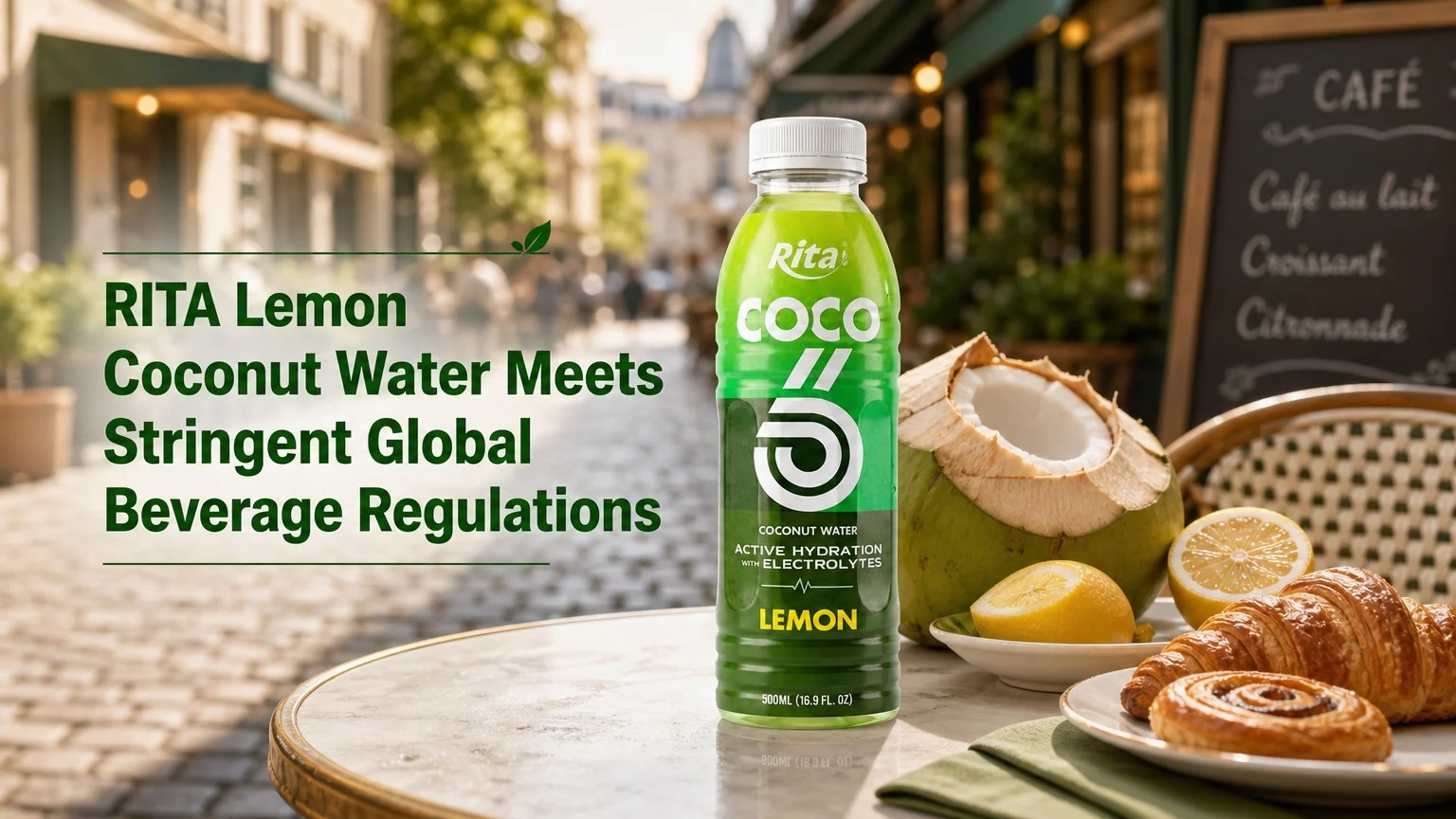
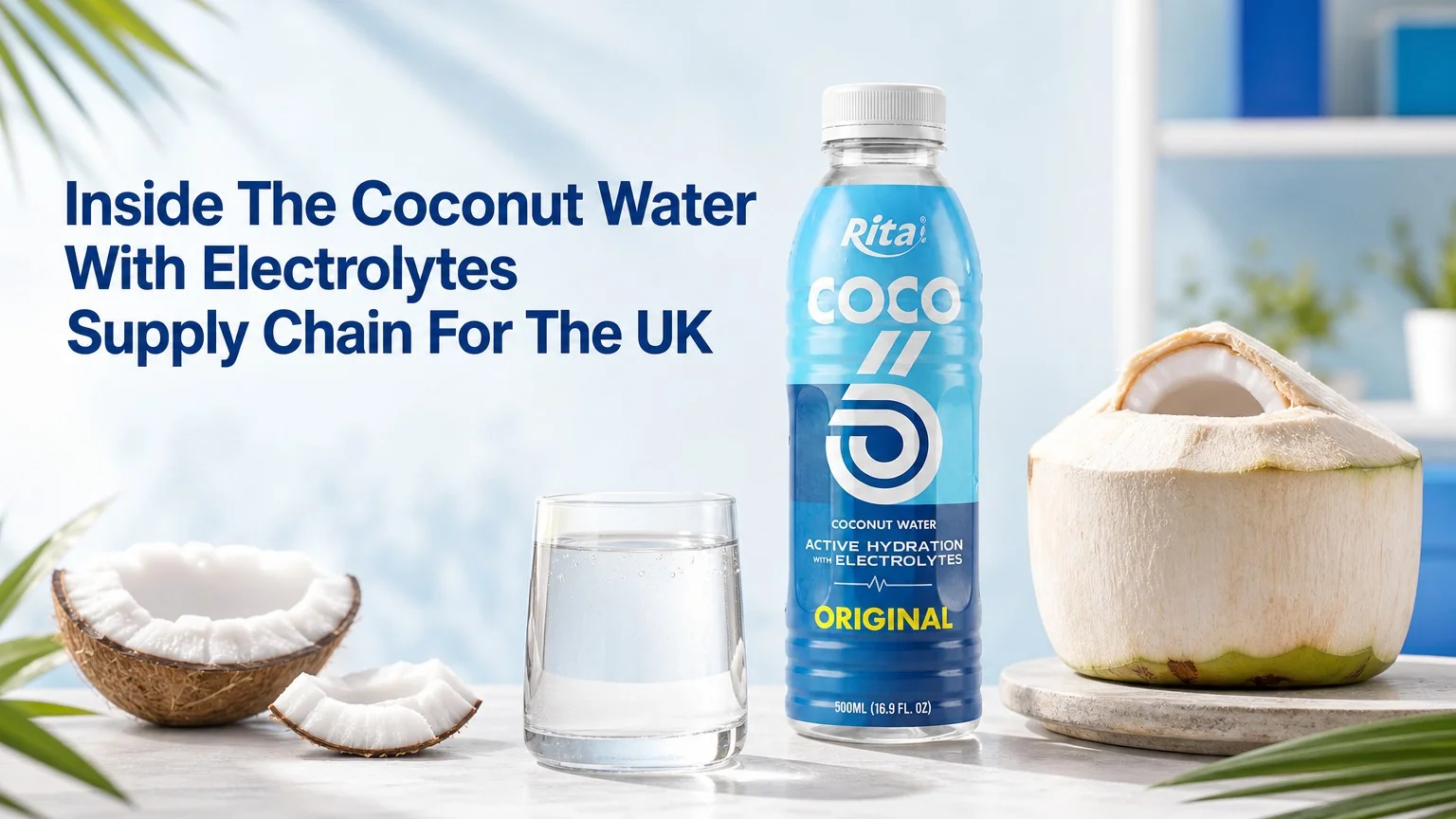
As regulatory scrutiny of imported food and beverages intensifies across the United Kingdom, manufacturers exporting to this market face an evolving landscape of compliance requirements. The Lemon Flavored Coconut Water with Electrolytes, produced by RITA Food and Drink Co., Ltd and marketed under the Rita Coco U brand, demonstrates how international producers are adapting to meet the UK's demanding food safety standards.
From certification acquisition to microbiological testing protocols, this 500ml PET bottle product reflects a broader industry trend toward regulatory transparency and rigorous quality assurance — trends that UK retailers, distributors, and importers increasingly demand from their supply partners.
Key Takeaways
- RITA holds BRC, FSSC 22000, ISO 22000, and HACCP certifications, meeting the regulatory prerequisites for UK beverage importation and retail shelf placement.
- The product's microbiological profile — with total plate counts below 10² CFU/ml and coliforms under 10 CFU/ml — exceeds UK Food Standards Agency requirements for imported beverages.
- Post-Brexit regulatory divergence has created a distinct compliance pathway for UK imports, making internationally certified manufacturers particularly competitive.
- Transparent labelling and a straightforward ingredient list align with UK food information regulations and growing consumer demand for product clarity.
- RITA's OEM and ODM capabilities enable UK retailers to develop private label coconut water products under full regulatory documentation.
The UK's Evolving Regulatory Framework for Imported Beverages
Regulatory compliance for imported beverages in the United Kingdom has never been more complex. The landscape has fundamentally shifted in recent years, creating both challenges and opportunities for manufacturers seeking access to UK retail shelves.
The United Kingdom's departure from the European Union reshaped the regulatory architecture governing imported food and beverages in ways that continue to unfold. While the UK initially retained much of EU food law through the retained EU law framework, subsequent legislative divergence has created distinct compliance requirements that differ — sometimes subtly, sometimes significantly — from those still in force across the channel. The Food Standards Agency (FSA), operating as an independent body, now establishes its own risk assessments, import controls, and enforcement priorities.
For beverage manufacturers, this divergence means that certifications and compliance documentation sufficient for EU market access may not automatically satisfy UK import requirements. The Border Target Operating Model, which phased in controls on EU and non-EU food imports throughout 2024 and 2025, introduced new checkpoint requirements that demand comprehensive supply chain documentation. Third-country manufacturers must demonstrate that their production standards meet UK equivalent requirements — a process that extends beyond product-level testing to encompass the entire production environment, supply chain traceability, and quality management infrastructure.
Recent industry developments underscore the strategic importance of robust regulatory frameworks across the global beverage sector. The restructuring activities at major players such as ThaiBev, along with FrieslandCampina's majority acquisition of Indonesia's Ultrajaya Milk, highlight how regulatory readiness and manufacturing scale are becoming decisive factors in determining which suppliers can serve demanding markets like the UK.
Post-Brexit Import Compliance
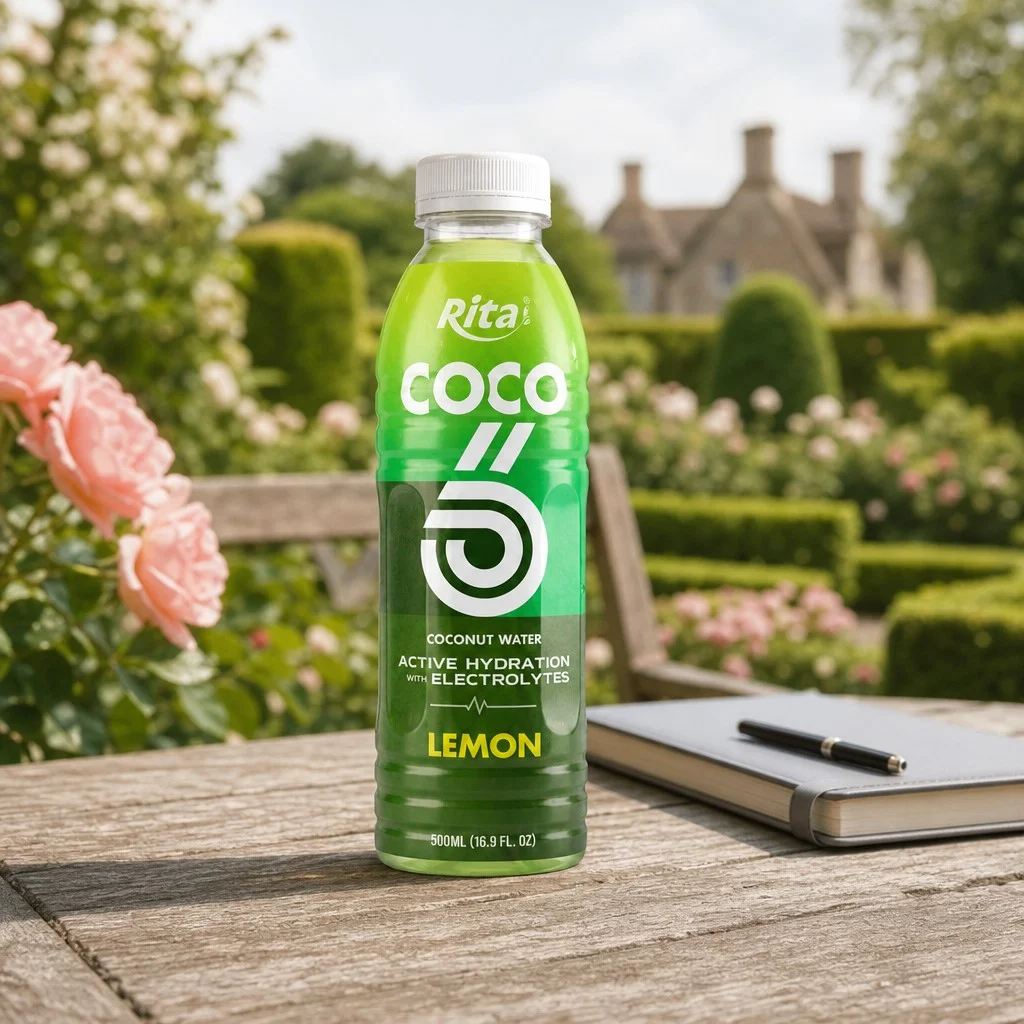
The compliance landscape for imported coconut water products involves multiple regulatory touchpoints that importers and manufacturers must navigate carefully. At the border, imported beverages must be accompanied by appropriate health and safety certificates, verified through the UK's import notification process. Products must demonstrate compliance with the General Food Law Regulation (retained EU Regulation 178/2002), which establishes the foundational principles of food safety, traceability, and the precautionary approach.
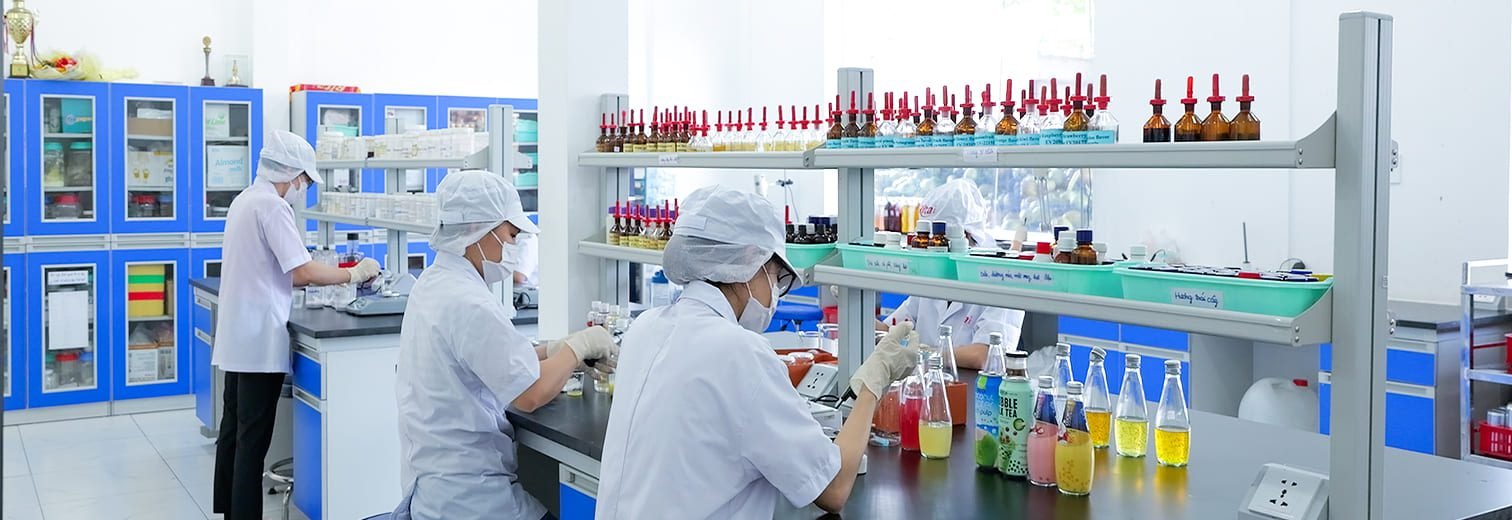
For manufacturers like RITA Food and Drink Co., Ltd — established in 2004 and now operating more than 50 automated production lines across Vietnam — meeting these requirements means maintaining documentation systems that can withstand regulatory scrutiny at any point in the supply chain. The company exports to over 180 countries, and its quality management systems are designed to satisfy the specific requirements of multiple regulatory jurisdictions simultaneously.
Certification Requirements for UK Retailers
UK retailers, particularly those operating in the supermarket and convenience store channels, typically require their suppliers to hold specific certifications as a condition of listing. The British Retail Consortium (BRC) Global Standard for Food Safety is among the most widely recognised, and holding BRC certification is effectively a prerequisite for shelf placement in major UK retail chains.
The Lemon Flavored Coconut Water with Electrolytes is produced under a comprehensive certification framework that includes:
- BRC Global Standard for Food Safety — the UK retail industry's benchmark certification for food manufacturers
- FSSC 22000 — an internationally recognised food safety management scheme
- ISO 22000 — food safety management systems standard covering all organisations in the food chain
- HACCP — hazard analysis and critical control points methodology
- Halal certification (Jakim and HCA-GCC) — relevant for the UK's diverse consumer base
- Kosher certification — supporting broader market accessibility across dietary segments
This layered certification approach provides UK importers and retailers with multiple points of assurance, addressing not only food safety management but also dietary compliance requirements relevant to the UK's multicultural consumer population.
From Plantation to UK Shelves: Raw Material Sourcing
Traceability from farm to finished product is a non-negotiable requirement for beverages entering the UK market. Regulators and retailers alike expect full supply chain transparency.
UK regulatory expectations for imported beverages extend beyond the finished product to encompass raw material sourcing and traceability. The General Food Law's traceability requirements mean that UK importers must be able to identify the origin of key ingredients at every stage of the supply chain. For coconut water products, this requires documented traceability from plantation through processing to finished product.
Ensuring Traceability and Quality at Source
RITA sources its coconut water from established cultivation regions in Vietnam, where the tropical climate supports year-round coconut production. The company's approach to raw material sourcing involves documented supplier qualification processes and quality monitoring from the earliest stages of the supply chain. This farm-to-factory traceability is essential for meeting UK regulatory expectations and providing the supply chain documentation that UK importers require.
Further details about RITA's coconut sourcing operations are available through the company's documentation of its Coconut Water Farm — From Plantation to High Quality Products, which outlines the cultivation and harvesting practices that underpin the raw material quality entering RITA's production facilities.
The broader range of coconut products manufactured by RITA demonstrates the company's depth of expertise in this product category, spanning coconut water, coconut milk, and coconut-based beverages for international markets.
For UK customers evaluating specific products, the complete coconut water range — including the Lemon Flavored Coconut Water with Electrolytes — is available through RITA's UK retail platform, with the wider RITA Coconut Water collection providing additional context for retailers exploring the full product range.
The raw material journey from Vietnamese coconut plantations to finished product is documented in this video overview of RITA's coconut sourcing operations:
https://www.youtube.com/watch?v=I7hlTL3FT_0
Quality Assurance for Lemon Flavored Coconut Water with Electrolytes
Microbiological safety is the cornerstone of beverage regulation in the UK. Imported products must meet exacting standards to gain and maintain market access.
The microbiological safety of beverages is a critical regulatory concern in the UK market. The Food Standards Agency establishes microbiological criteria that imported beverages must meet, and enforcement actions for non-compliance can result in product recalls, import refusals, and reputational damage for both manufacturers and their retail partners. For coconut water products — which have naturally higher pH values than many fruit-based beverages — microbiological control is particularly important.
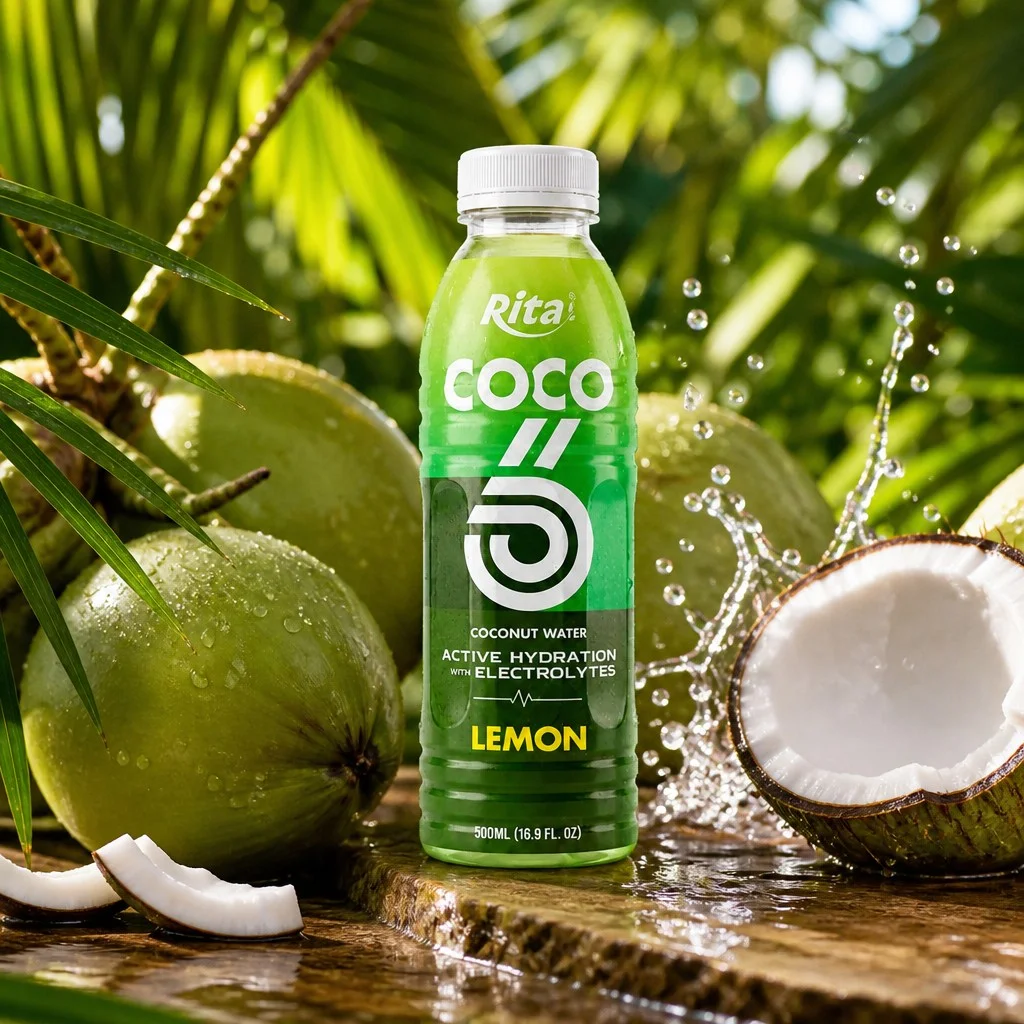
The 500ml Lemon Flavored Coconut Water with Electrolytes demonstrates RITA's commitment to microbiological control through consistently low microbial counts. Total plate counts below 10² CFU/ml and coliform counts under 10 CFU/ml represent performance levels that provide a substantial safety margin against UK regulatory thresholds. These results are maintained through automated monitoring systems and routine testing protocols that document compliance throughout the production process.
Labelling Compliance for the UK Market
UK food labelling requirements, governed by the Food Information Regulations 2014 and subsequent post-Brexit amendments, impose specific obligations on how product information is presented to consumers. Ingredient lists must be presented in descending order of weight, allergens must be clearly highlighted, and nutritional information must follow prescribed formatting. For imported products, the UK importer or distributor typically bears responsibility for ensuring label compliance, though manufacturers are expected to provide accurate source data.
The RITA Lemon Flavored Coconut Water with Electrolytes features a deliberately transparent ingredient list: coconut water, lemon flavouring, and electrolyte minerals including potassium, calcium, magnesium, potassium chloride, sodium lactate, and magnesium chloride. Each 500ml bottle provides specific electrolyte content — 151mg of potassium and 22mg of calcium per 100ml — with clear, quantified labelling that supports compliance with UK nutritional information requirements.
The product's Brix level of 6.4 and pH of 4.1 are maintained consistently through RITA's automated quality control systems, ensuring that the taste profile and product characteristics experienced by UK consumers match the specifications documented on the label. This consistency between labelled claims and actual product characteristics is a fundamental requirement of UK food labelling law.
For UK retailers and distributors evaluating this product, detailed specifications and certification documentation are available through the Lemon Flavored Coconut Water with Electrolytes product page.
Shelf Life, Distribution, and Market Access
Extended shelf life products offer distinct regulatory and commercial advantages in the complex UK distribution chain.
The Lemon Flavored Coconut Water with Electrolytes carries an 18-month shelf life from the date of manufacture — a regulatory and commercial advantage for UK distribution. Extended shelf life simplifies compliance with date marking requirements under the Food Information Regulations and provides the inventory flexibility that UK retailers require when managing supply chains that may involve long transit times from Southeast Asian production facilities.
The product's packaging — a 500ml green PET bottle with the Rita Coco U branding — is designed for compatibility with UK retail environments. The lightweight PET format reduces logistics costs and carbon footprint during transit, while the bottle dimensions are optimised for standard UK retail shelving. The recyclable PET material also aligns with UK packaging sustainability expectations, which are increasingly becoming a factor in retailer supplier evaluations and procurement decisions.
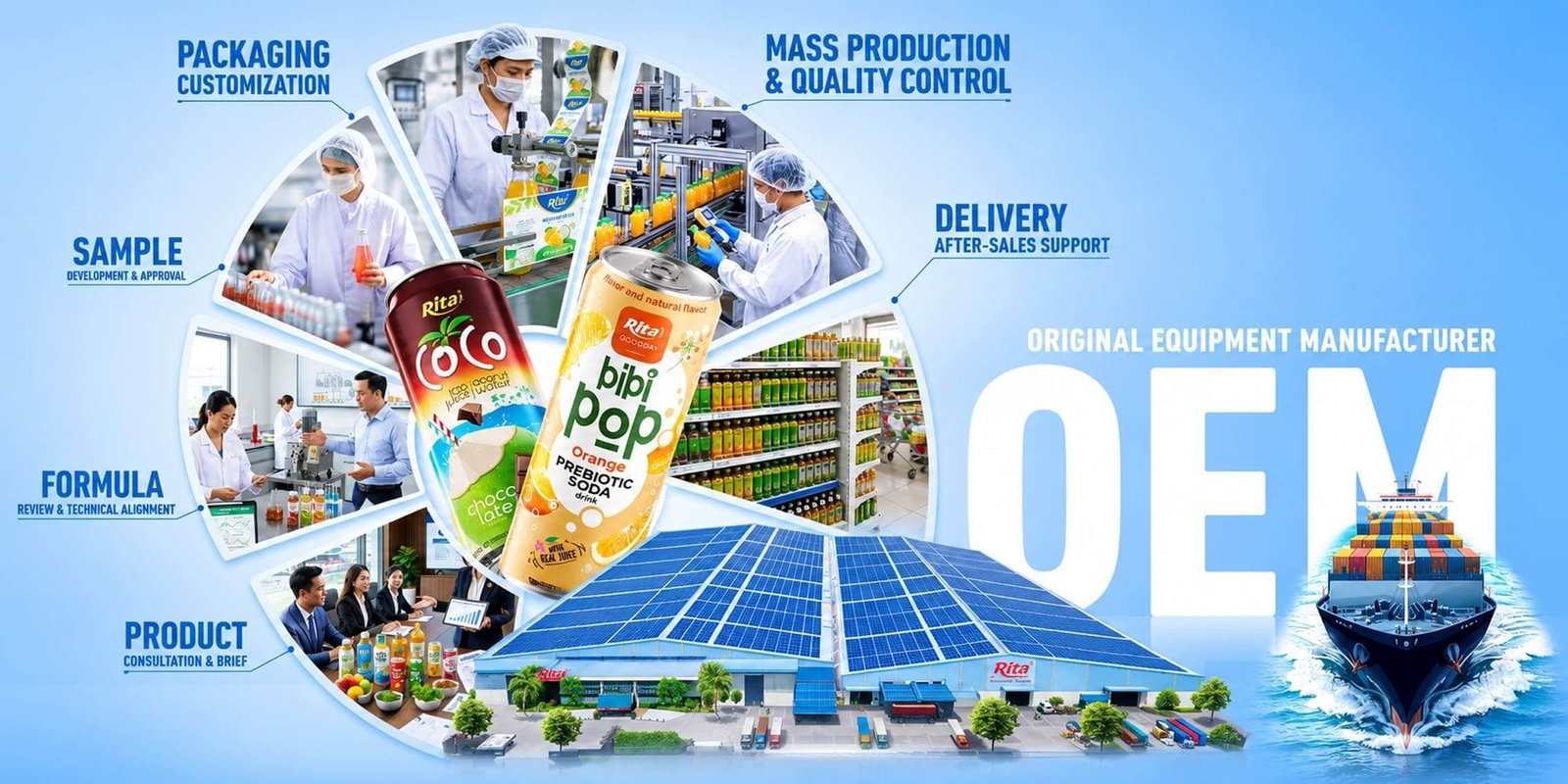
For UK businesses seeking to enter the coconut water category through private label channels, RITA's OEM and ODM capabilities — backed by over 50 automated production lines and a monthly export capacity exceeding 1,200 containers — provide the manufacturing scale needed to support UK retail volumes. Information about RITA's private label services is available through the company's OEM service and ODM service documentation, which outline the customisation options available for UK retail partners.
Frequently Asked Questions
What certifications does the RITA Lemon Flavored Coconut Water hold?
The product is manufactured under BRC Global Standard for Food Safety, FSSC 22000, ISO 22000, and HACCP certified quality management systems. Additional certifications include Halal (Jakim and HCA-GCC) and Kosher, providing comprehensive compliance documentation for UK importers and retailers across multiple dietary and quality requirements.
How does this product meet UK microbiological standards?
The Lemon Flavored Coconut Water with Electrolytes consistently achieves total plate counts below 10² CFU/ml and coliform counts under 10 CFU/ml. These figures meet or exceed the microbiological criteria established by the UK Food Standards Agency for imported beverages, with RITA's automated monitoring systems ensuring batch-to-batch consistency.
Can UK retailers source this as a private label product?
Yes, RITA Food and Drink Co., Ltd provides both OEM and ODM services, enabling UK retailers to develop custom-branded coconut water products. The company's manufacturing infrastructure supports flexible production runs with full regulatory compliance documentation tailored to UK market requirements.
What is the shelf life and what does this mean for UK distribution?
The product carries an 18-month shelf life, which provides extended distribution windows and supports efficient inventory management across UK retail and convenience store channels. This extended shelf life also simplifies compliance with date labelling requirements and reduces the risk of products approaching their use-by dates during the distribution chain.
What electrolytes are included in the product formulation?
The formulation includes potassium (151mg per 100ml), calcium (22mg per 100ml), magnesium, potassium chloride, sodium lactate, and magnesium chloride. These electrolytes are added to the natural coconut water base along with lemon flavouring, creating a product with electrolyte content beyond that of plain coconut water.