RITA on Alibaba





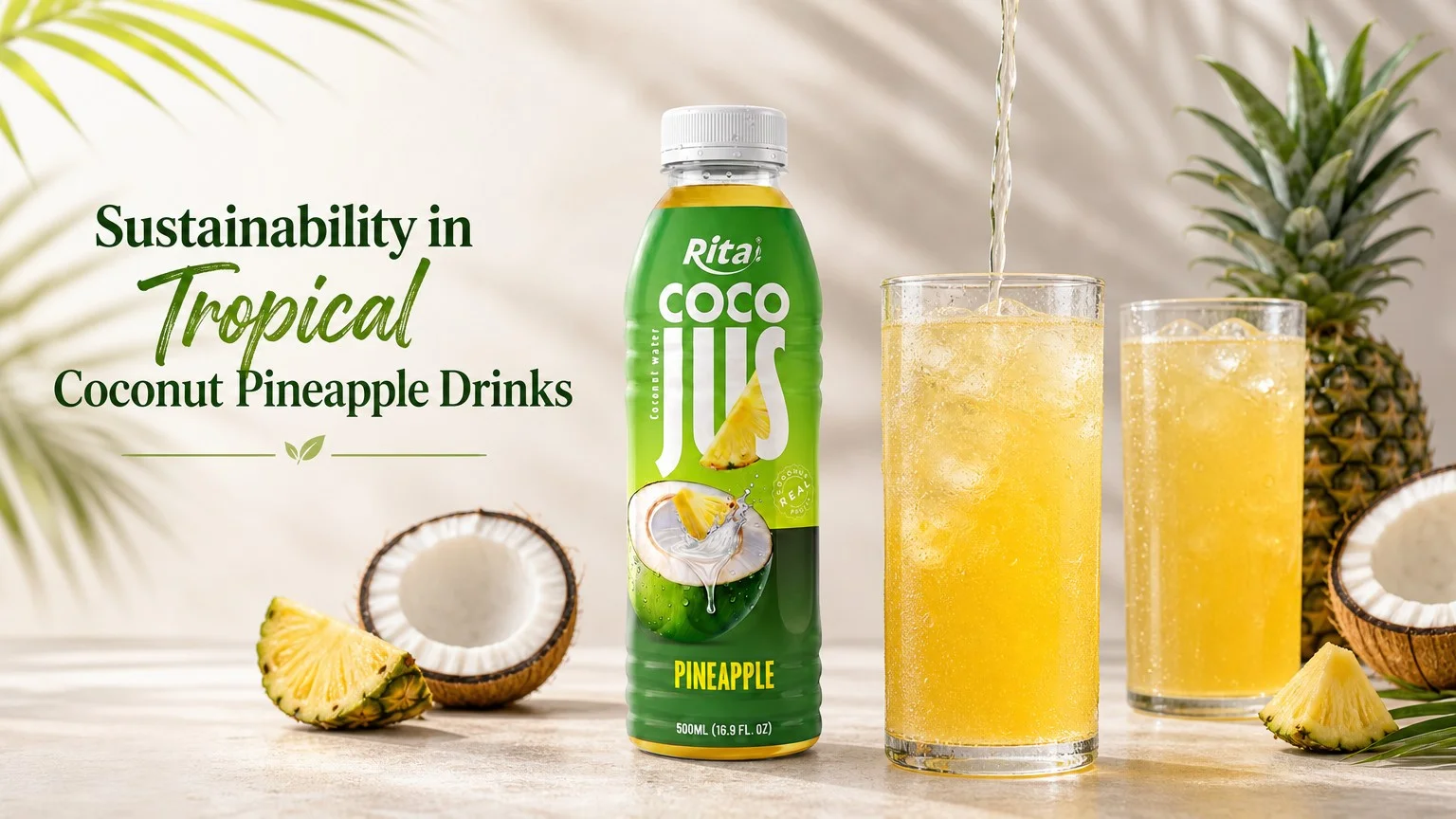
UK grocery aisles have never carried a wider selection of tropical drinks, yet the questions behind them have shifted sharply. Retailers and wholesale buyers are now interrogating sourcing, packaging and label clarity far more closely, and coconut water with pineapple juice has emerged as a focal point of that debate.
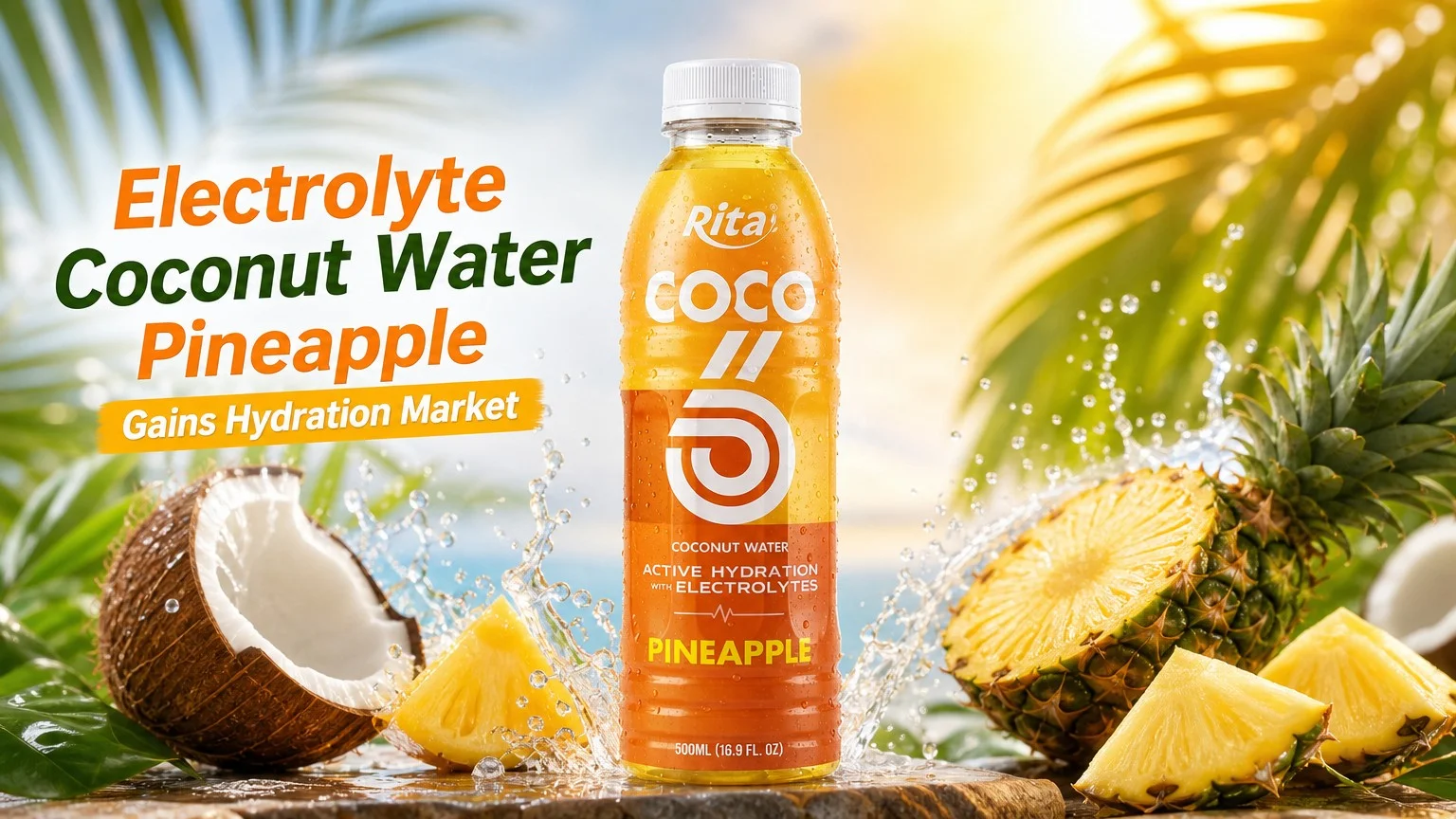
Positioned as a lighter, fruit-forward alternative to sugary carbonates and heavily flavoured nectars, the blend brings two recognisable tropical ingredients together in a single 500ml PET bottle — a format that sits naturally in chilled retail cabinets, grab-and-go displays, cafe counters and foodservice menus across the United Kingdom.
Against that backdrop, sustainability has stopped being a press-release talking point. It is becoming a commercial criterion — one that shapes ranging decisions, private label briefs and supplier scorecards. For manufacturers able to substantiate their claims with traceable raw materials and internationally recognised certifications, the current climate offers a genuine and defensible route to shelf.
Key Takeaways
- UK retail buyers are prioritising transparent ingredient lists, shorter formulations and verifiable sourcing credentials.
- Coconut water with pineapple juice combines real coconut water with real pineapple juice in a 500ml PET bottle, targeting chilled, grab-and-go and foodservice channels.
- Water stewardship, recyclable packaging and farm-to-bottle traceability are increasingly part of buyer conversations rather than afterthoughts.
- RITA supplies brands in more than 200 countries and territories, offering OEM and ODM formats for distributors and private label partners.
- Certifications including BRC, FSSC 22000, ISO, HACCP, Halal Jakim and Kosher underpin export readiness for tightly regulated markets.
Why UK Retailers Are Watching Coconut Water with Pineapple Juice
Category momentum is being driven by format as much as by flavour. A 500ml PET bottle is large enough to serve as a standalone refreshment yet compact enough for chilled impulse fixtures, and that balance matters more than it once did. UK buyers ranging the tropical bay are looking for products that can move quickly without leaning on aggressive promotional pricing, and a two-ingredient blend with a clean flavour profile does that job more comfortably than a heavily sweetened nectar.
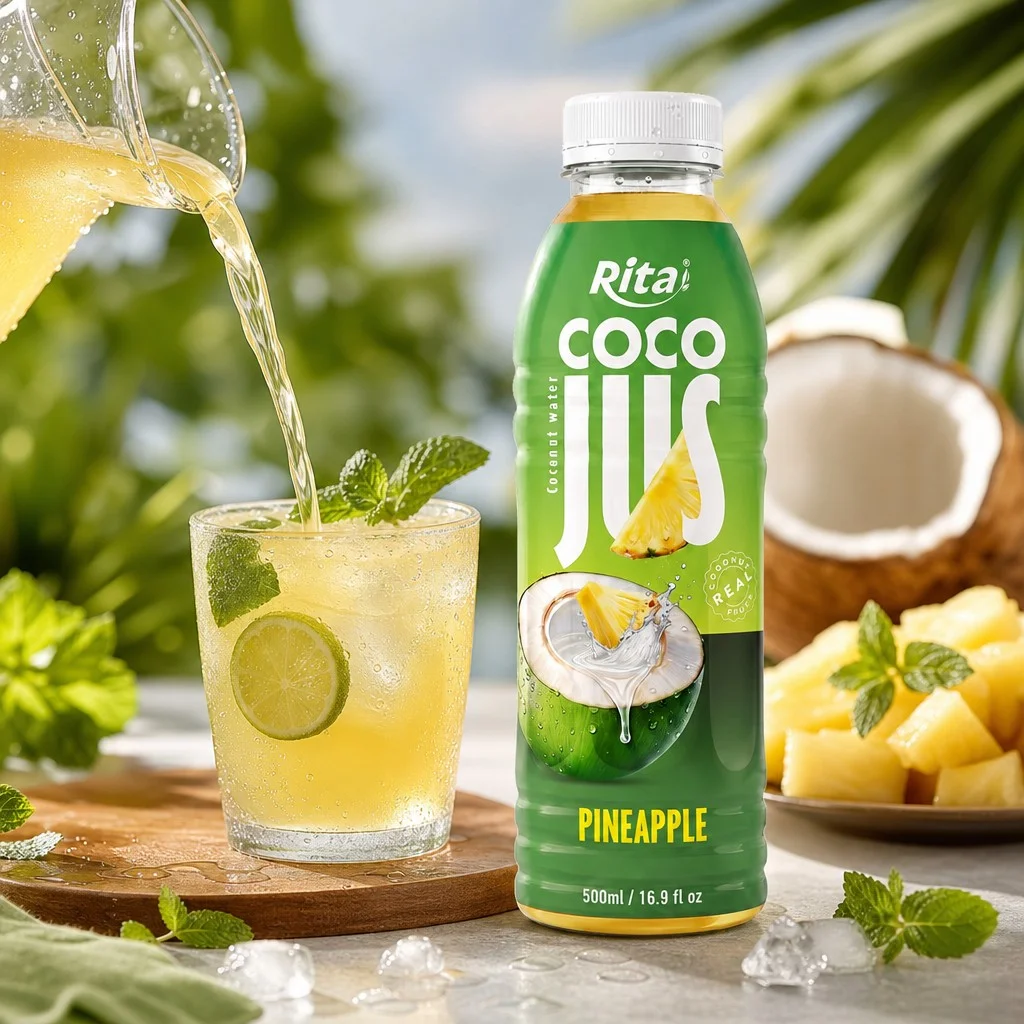
Consumer expectation is the other half of the equation. Shoppers increasingly read the back of packs before they read the front, and vague descriptors — "tropical flavour", "with fruit juices", "from concentrate" — now trigger questions rather than reassurance. The RITA Coco Jus pineapple variant is explicit about what it contains: real coconut water as the base, real pineapple juice for the tropical character, nothing designed to obscure the list. That clarity is precisely what independent shops, national chains and foodservice operators have come to expect from the wider coconut water product range offered by the brand.
There is also a pragmatic dimension to the trend. Established players have shown how quickly portfolios can be reshaped around new consumer expectations — Keurig Dr Pepper's appointment of new coffee leadership alongside its global cold-coffee concentrates push, and Cizzle Brands' expansion of its sports drink portfolio, both signal that major beverage groups are repositioning around formats and positioning rather than simply extending existing lines. The same logic applies to the tropical aisle: the winning products will be those that answer buyer questions about provenance and packaging before those questions are even asked.
What the Blend Brings to the Shelf
Flavour architecture is where the product earns its place. Coconut water on its own tends to read as mildly savoury and slightly nutty, which can feel thin to consumers raised on intensely flavoured soft drinks. Pineapple introduces acidity and aromatic brightness, lifting the profile without pushing it into dessert territory. The result is a balanced sweetness with a natural fruit character and a clean, slightly tangy finish — the kind of profile that performs well both chilled and at ambient temperature, which broadens the occasions it can be ranged into.
- Two-ingredient transparency — coconut water and pineapple juice are named directly on the label, supporting the shift toward cleaner ingredient stories.
- Measured sweetness — a Brix reading of 7.0 ± 0.5 places the drink below the conventional tropical nectar band, making it easier to position alongside lighter refreshments.
- Recognisable format — the 500ml PET bottle maps onto existing chilled fixture planograms rather than requiring new shelf architecture.
- Ingredient-derived colour — the pale yellow-orange character visible through the bottle comes from the pineapple component rather than from added colourants.
Sustainability Is Becoming a Shelf-Level Argument
Sustainability now functions less as a brand virtue and more as a risk-management tool for UK retail. Buyers are being asked — by their own boards, by regulators and by increasingly vocal shoppers — to demonstrate that the products on their shelves can withstand scrutiny from production through to disposal. For tropical beverages, that scrutiny lands hardest on three points: how the raw fruit is grown, how much water the process consumes, and what happens to the packaging afterwards.
The coconut water with pineapple juice proposition is well suited to that conversation because its case can be evidenced rather than asserted. Raw material traceability can be documented at farm level, the formulation avoids unnecessary additives, and the PET format is recyclable through established collection streams. None of these points are claims that need embellishment, which is exactly why they hold up under buyer due diligence.
Packaging Choices and the PET Question
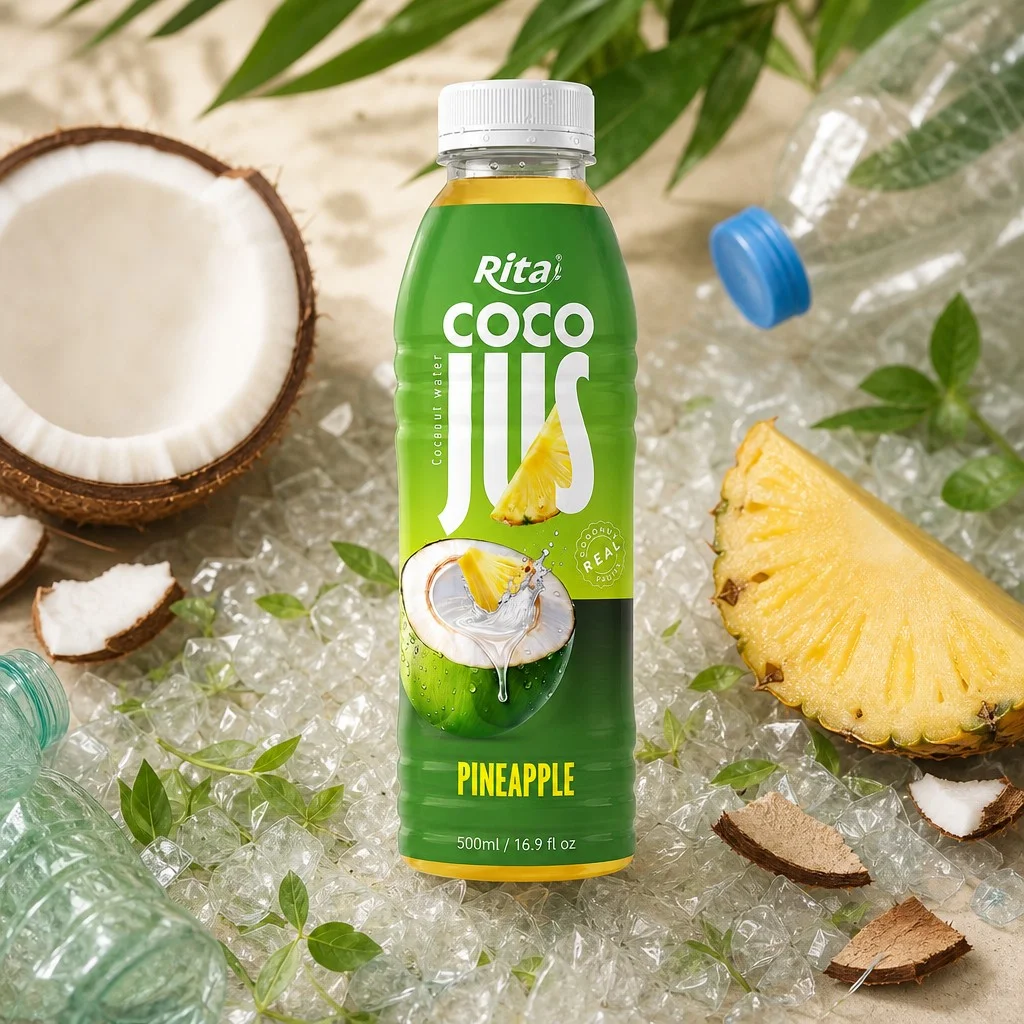
Every packaging format carries trade-offs, and PET sits in an interesting position for tropical beverages. It is lightweight — which matters for a category where water and juice carry significant transport mass — it is widely accepted across UK kerbside recycling schemes, and it protects flavour and colour integrity throughout the supply chain. For a chilled product distributed over considerable distances, that combination of lightness and durability is difficult to beat on a like-for-like basis.
Transparent PET also supports the clean-label positioning directly. Consumers can see the colour of the liquid before they buy it, and that visual honesty reinforces the ingredient story printed on the label. In a category where suspicion of artificial flavourings runs high, being able to show the product rather than merely describe it is a meaningful advantage for range listing discussions.
Water Stewardship and Traceable Sourcing
Water is the ingredient most often overlooked in beverage sustainability conversations, and yet it is central to a coconut-based drink. Efficient irrigation at the farm stage, judicious use of water during processing and sensible decisions about by-product management all contribute to the overall footprint, and buyers are beginning to ask for evidence on each of them rather than accepting broad assurances.
Traceability is the mechanism that makes those conversations productive. When a manufacturer can show where a coconut was harvested and where a pineapple was grown, the discussion shifts from vague commitments to specific, auditable detail. That shift is visible across the wider beverage sector, where provenance storytelling is increasingly replacing marketing jargon — a point the Benchmark Drinks team has made forcefully about premium categories more broadly.
From Our Orchards — Raw Material Sourcing Behind the Blend
The raw ingredients are the foundation of the entire proposition, and the sourcing network behind them deserves attention. Coconut water for the blend is drawn from established growing regions where the fruit is processed close to harvest, preserving the flavour profile that a tropical blend depends on. You can read the full account in the Ben Tre coconut farm journey, which traces the process from plantation to finished product.
Pineapple follows a parallel path. The fruit is selected at peak maturity to deliver the aromatic brightness the blend requires, with harvest timing and handling treated as critical variables rather than routine ones. The pineapple farm exploration documents how that sourcing discipline is maintained at growing level.
For a closer look at how raw material quality translates into the finished coconut water, the following footage walks through the process end to end: https://www.youtube.com/watch?v=I7hlTL3FT_0
Product Specifications and Category Positioning
Technical consistency is what allows a product to survive export distribution without complaint, and the Coco Jus specification is built around that requirement. A pH of 4.0 ± 0.5 and a Brix of 7.0 ± 0.5 keep the drink within a defined performance window, while the microbiological controls applied to the finished product are among the strictest in the category — total plate count below 10² CFU/ml, coliforms below 10 CFU/ml and E. coli below 1 CFU/ml. That level of control matters when a chilled product is moving through warm-weather distribution chains and long-haul export routes.
| Attribute | Coco Jus Coconut Water with Pineapple Juice | Typical Coconut Water | Typical Tropical Nectar |
|---|---|---|---|
| Primary base | Real coconut water and real pineapple juice | Coconut water | Concentrate and/or flavourings |
| Packaging | 500 ml (16.9 fl oz) PET bottle | 330–500 ml PET or can | 250–330 ml PET or carton |
| Brix | 7.0 ± 0.5 | Indicatively 5.0–7.0 | Indicatively 12–16 |
| pH | 4.0 ± 0.5 | Indicatively 4.5–5.5 | Indicatively 3.5–4.0 |
| Energy per 100 ml | 28 kcal | Indicatively 18–25 kcal | Indicatively 50–65 kcal |
| Sugars per 100 ml | 6.5 g | Indicatively 4.5–5.5 g | Indicatively 12–15 g |
Product specification values as published by RITA. Comparison columns are indicative category norms intended for positioning context only.
Read side by side, the numbers explain why the blend is easier to range than a conventional tropical nectar. Its sugar load sits well below the nectar band, its energy density is modest, and the two-ingredient composition gives buyers a formulation they can explain to shoppers in a single sentence. It also sits comfortably alongside coconut-only offerings — a position it occupies as a variant within the wider fruit juice and tropical juice catalogue maintained by the brand for UK partners.
Distribution practicality rounds out the case. The PET bottle is recyclable, the label carries clear ingredient disclosure, and the 500ml format maps onto existing chilled fixture plans without requiring bespoke shelf hardware. For a buyer weighing a new tropical listing, that combination removes several of the usual friction points before a single case has been ordered.
RITA's Export Capacity and Private Label Support
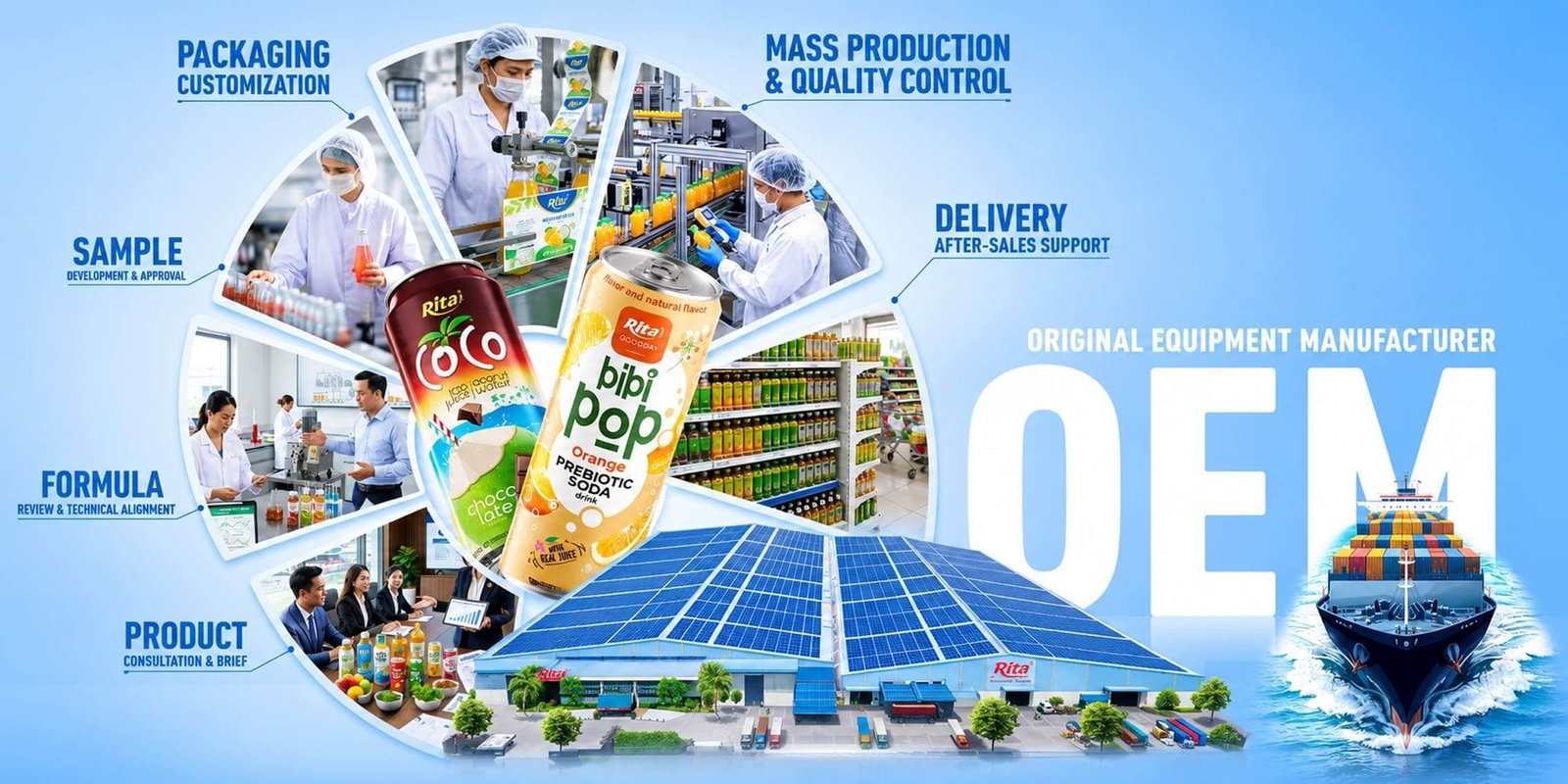
Behind the product is a manufacturer with the scale to supply it consistently. RITA Food and Drink Co., Ltd has operated since 2004 as a Vietnamese OEM and ODM beverage manufacturer, running more than 50 automated production lines and shipping over 1,200 containers per month. The company supplies brands across more than 200 countries and territories, with the reach and flexibility to serve independent UK shops as readily as national chains.
That scale is paired with a certification framework designed for regulated markets. BRC, FSSC 22000, ISO, GMP, HACCP, Halal Jakim, Halal HCA-GCC, Kosher and SMETA all feature in the company's quality credentials — a portfolio that makes the Coco Jus Real Coconut Water with Pineapple Juice readily deployable in UK retail and foodservice settings where certification evidence is requested as a matter of course.
For buyers with their own branding ambitions, the OEM and ODM offer is the more interesting part of the picture. Formulation adjustments, packaging formats ranging from PET and PP bottles to aluminium cans and glass, and label specifications tailored to regional requirements are all available — meaning a UK distributor can commission a coconut-and-pineapple variant matched to its own commercial brief rather than accepting an off-the-shelf specification. More detail on the manufacturing model is available through the company's company overview and its dedicated OEM service pages.
Looking Ahead — Sustainability as a Commercial Lever
The evidence from across the beverage industry points in one direction. Wine brands have been advised to lead with emotional storytelling rather than specification-heavy messaging, established soft drink groups are reshaping portfolios around new formats and positioning, and premium players are investing in more transparent sourcing narratives. What unites those moves is an acceptance that the story a product tells about its own production is now part of the product itself.
For a tropical blend like Coco Jus Real Coconut Water with Pineapple Juice, that shift creates a favourable environment. The formulation is short and legible, the packaging is recyclable, the raw materials are traceable to named growing regions, and the manufacturer behind it carries the certifications UK buyers increasingly treat as entry requirements. Sustainability, in other words, is not a bolt-on marketing theme here — it is a description of how the product is already made.
The commercial question for UK buyers in the coming range cycles is therefore not whether tropical beverages can justify a sustainability narrative, but which products can sustain that narrative under scrutiny. Products built on real ingredients, documented sourcing and internationally recognised quality systems are best positioned to answer it — and that is the segment in which this coconut water and pineapple juice blend intends to compete.
Frequently Asked Questions
What are the main ingredients in Coco Jus Real Coconut Water with Pineapple Juice?
The beverage is formulated with real coconut water as its primary base and real pineapple juice for its tropical flavour. The combination produces a balanced sweetness with a natural fruit character and a clean, slightly tangy finish, with no artificial flavourings in the formulation.
What packaging does the product use and is it recyclable?
Each 500ml (16.9 fl oz) serving is packed in a transparent PET bottle with a white cap. PET is lightweight, widely accepted through UK kerbside recycling schemes and supports clear ingredient disclosure on the label.
What is the sugar content of the drink?
The specification lists 6.5g of sugars and 7g of carbohydrates per 100ml, with an energy value of 28 kcal per 100ml. The Brix reading of 7.0 ± 0.5 places it below the band typical of conventional tropical nectars.
Can the product be supplied as a private label or custom specification?
Yes. RITA operates as an OEM and ODM manufacturer with more than 50 automated production lines, offering formulation adjustments, alternative packaging formats and label customisation for distributors and retail partners.
Which certifications support the product for UK supply?
The manufacturer holds BRC, FSSC 22000, ISO, GMP, HACCP, Halal Jakim, Halal HCA-GCC, Kosher and SMETA certifications, alongside stringent microbiological controls applied throughout production.