RITA on Alibaba





Coconut water with electrolytes has moved from a niche sports-drink alternative to a mainstream fixture across British retail and wholesale channels — and the regulatory expectations surrounding the category have moved with it. As import volumes climb and private label programmes expand, buyers across England, Scotland, Wales and Northern Ireland are scrutinising labelling, certification and promotional language far more closely than they did a decade ago.
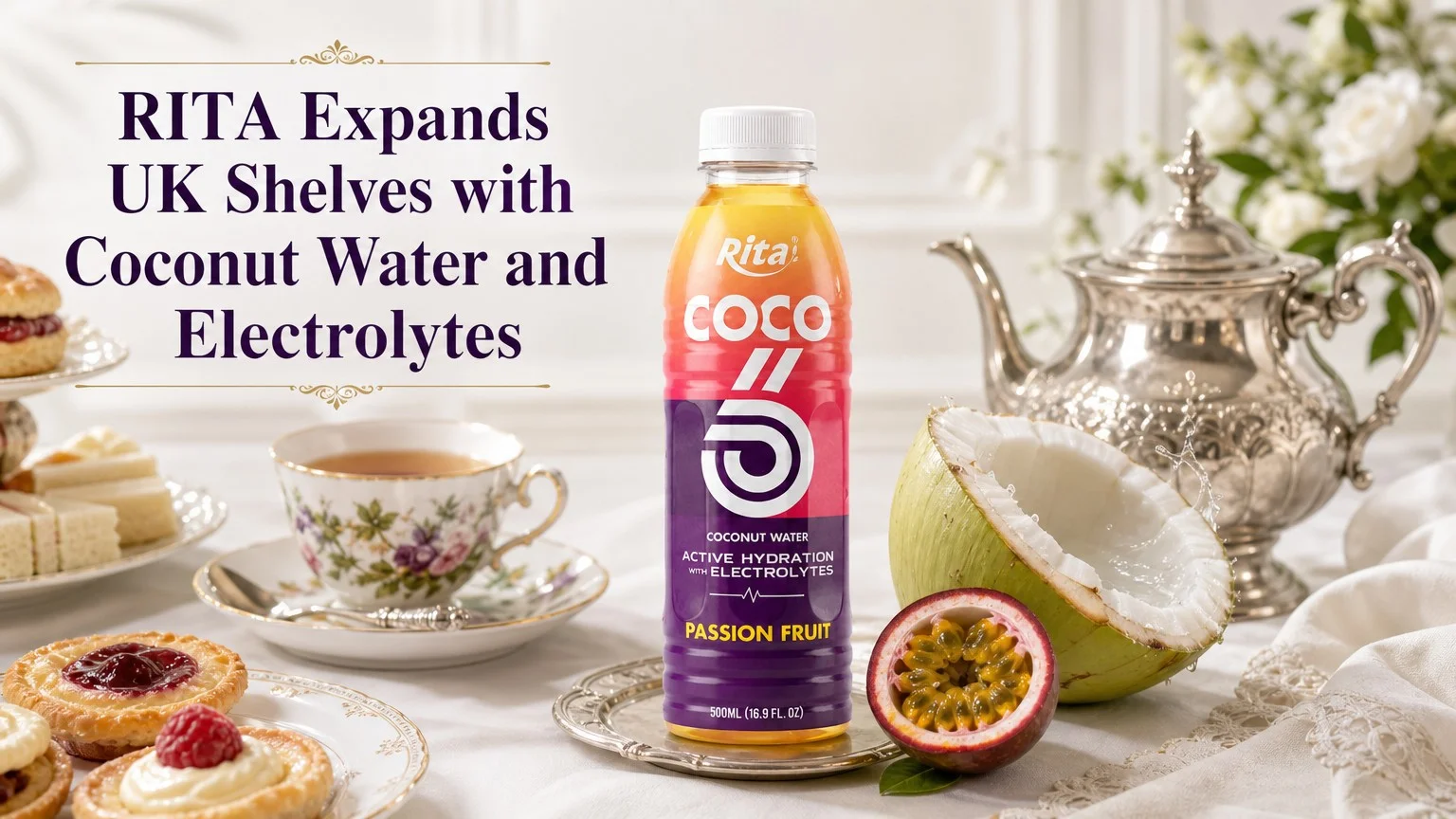
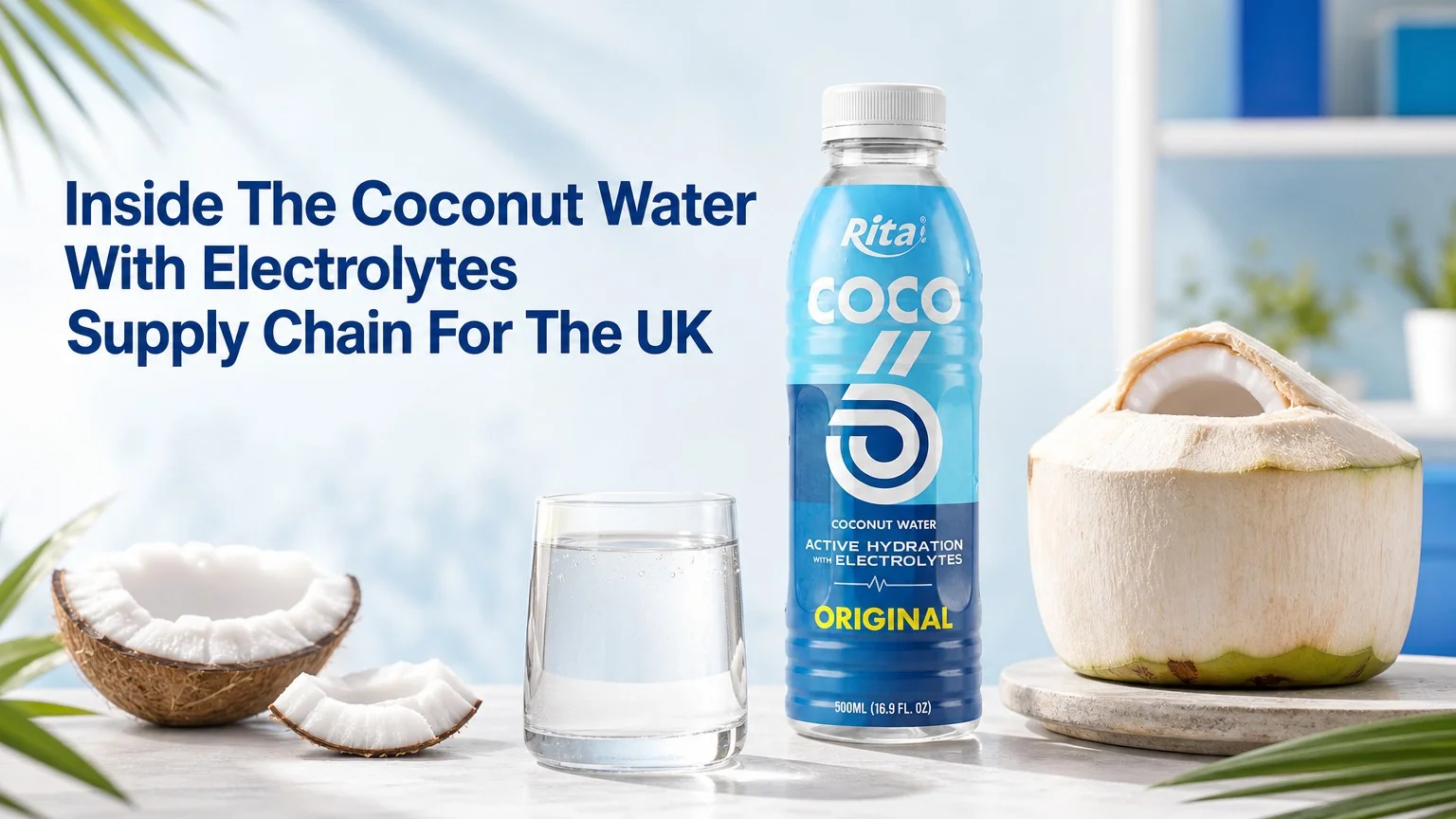
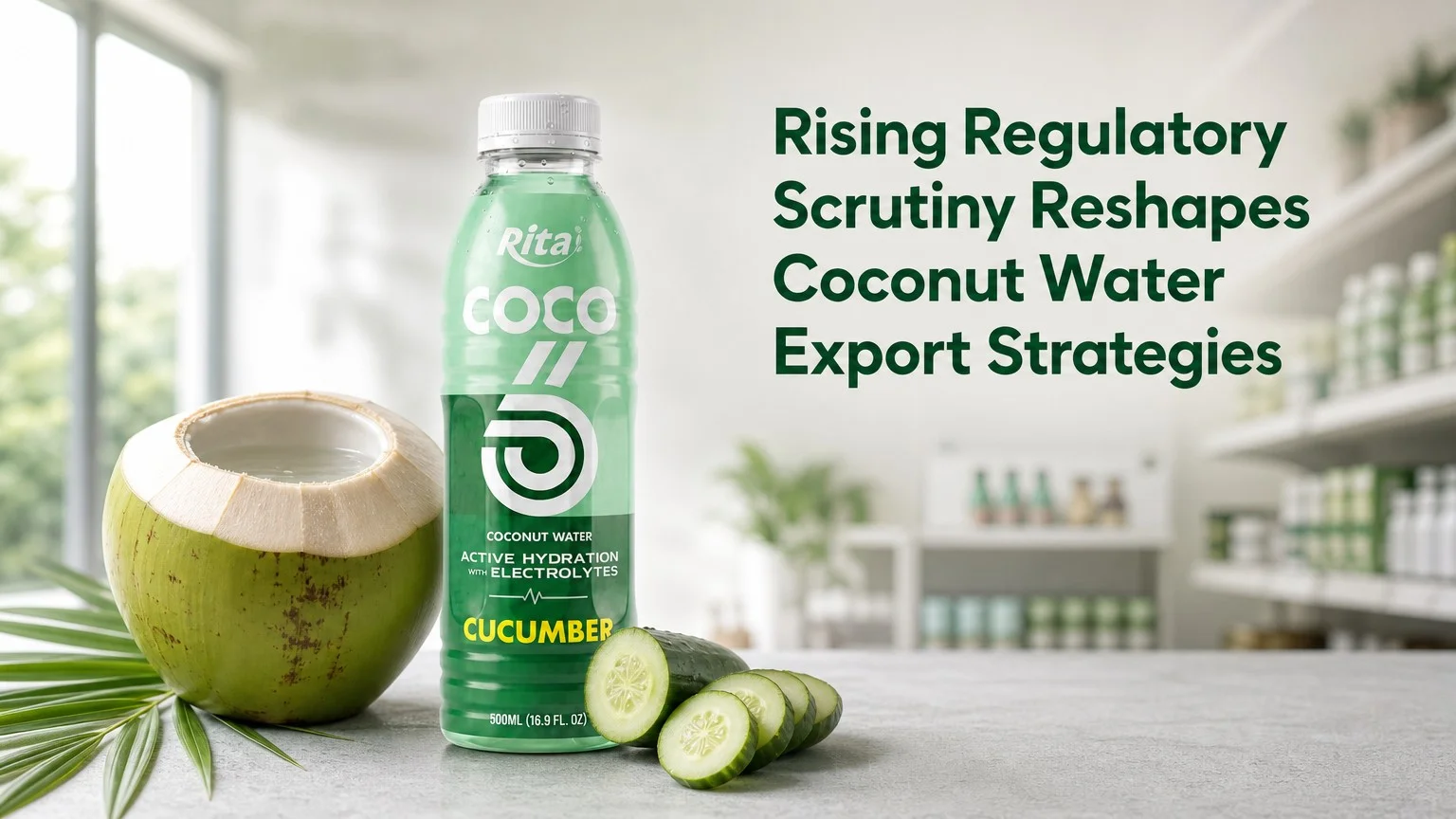
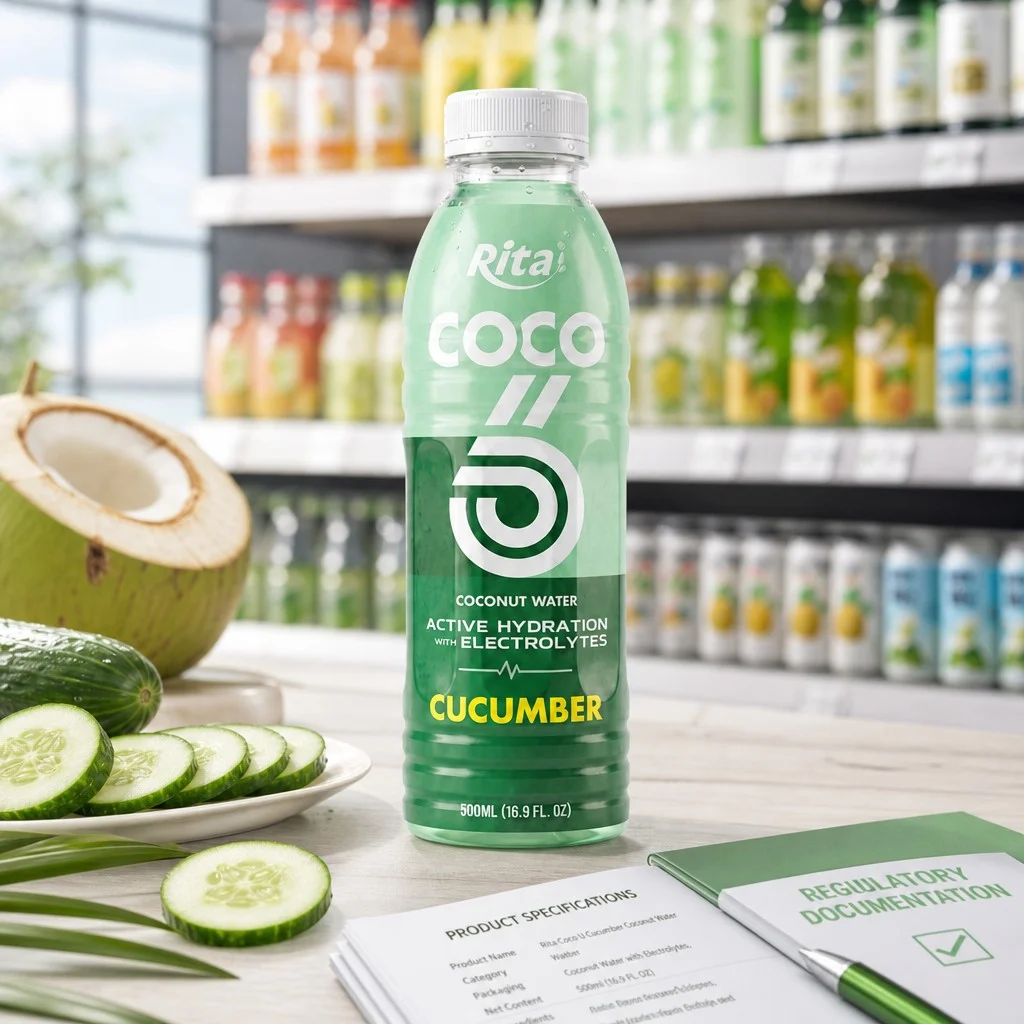
One product that illustrates this shift in detail is the COCO Active Hydration Coconut Water with Electrolytes Cucumber Flavor, a cucumber coconut water formulation from Vietnamese manufacturer RITA Food & Drink Co., Ltd that pairs a natural coconut water base with a clearly defined electrolyte blend and a minimalist 500ml PET format built to survive long-haul export.
Key Takeaways
- Coconut water with electrolytes now faces tighter labelling, documentation and claims scrutiny across British retail and wholesale channels.
- Certification stacks — BRC, FSSC 22000, ISO 22000, HACCP, Halal and Kosher credentials — increasingly decide shelf access for imported drinks.
- Differentiation is shifting from promotional language to specification: flavour profile, Brix, pH, packaging format and shelf life.
- RITA Food & Drink Co., Ltd supplies the COCO Active Hydration range through export and private label programmes backed by multi-standard certification.
- Packaging choices such as 500ml PET bottles, recyclability and extended shelf life have become part of the compliance conversation, not just marketing.
Why Coconut Water With Electrolytes Faces A Different Regulatory Bar
The category has outgrown its informal reputation. Coconut water with electrolytes is now positioned as a mainstream purchase, which means it is judged against the same labelling, traceability and documentation standards as any other imported packaged beverage. For buyers in England, Scotland, Wales and Northern Ireland, the discussion has shifted from shelf appeal to compliance evidence.
 " alt="COCO Active Hydration Coconut Water with Electrolytes Cucumber Flavor PET bottle on a British retail shelf" />
Britain continues to operate a body of retained food law that closely mirrors the European Union regime. Regulation (EC) No 178/2002 on General Food Law principles, Regulation (EC) No 1169/2011 on food information to consumers, and retained provisions of Regulation (EC) No 1924/2006 on nutrition and health claims all still shape what a compliant pack must carry. Mandatory allergen information, a nutrition declaration, batch or lot marking, the name and address of the responsible food business operator in Great Britain, storage instructions and a 'best before' or 'use by' date remain the baseline checks that importers run before a single pallet is cleared for sale.
The consequence is that specification sheets, not brochures, now do the heavy lifting in category reviews. A supplier that can present a stable Brix reading, a consistent pH range, a documented electrolyte composition and a packaging format that survives container transit is effectively presenting its regulatory position at the same time as its product.
Import Controls And Shelf-Readiness
Under the Border Target Operating Model, food imports are subject to risk-based controls, with documentary, identity and physical checks applied according to product category. For coconut water — a liquid product often shipped in PET or glass from production facilities outside the UK — that means traceability records, batch codes, storage temperatures and certification validity are verified before retail listing rather than after a complaint is raised.
- Batch and lot codes that can be tied back to a specific production run and export consignment.
- Accurate country-of-origin statements and a named, reachable importer of record in Great Britain.
- Legible date marking and storage guidance that match the declared shelf life of 18 months at cool, dry conditions.
- Ingredient and electrolyte declarations that reconcile with the technical specification supplied by the manufacturer.
- Certification evidence current at the time of shipment, rather than archived certificates from a previous audit cycle.
Claims Are Where Enforcement Gets Personal
Advertising enforcement has become one of the most active pressure points in the UK drinks market. The Advertising Standards Authority's reprimand of meal-replacement brand Huel over claims made in its marketing is a useful reference point for the entire category: regulators are looking past product names to the specific promises a brand makes on pack, on shelf and on social media.
The commercial implication is straightforward. COCO Active Hydration positions itself on specification and taste rather than on elaborate claims, presenting a natural coconut water base combined with a defined electrolyte blend of potassium chloride, sodium lactate, calcium chloride and magnesium chloride, and a cucumber flavouring that gives the drink its distinctive cool, crisp finish. That kind of description is both commercially distinctive and comparatively safe in a market where unauthorised health language attracts enforcement attention.
Certification Programmes That Carry Weight With UK Buyers
For imported beverages, a credible certification stack is now a practical entry requirement rather than a bonus. Retail buyers use it to shortcut due diligence, and import control officers use it to establish whether a supplier's food safety management system has been independently assessed.
RITA Food & Drink Co., Ltd, established in 2004 and based in Vietnam, operates to a certification portfolio that covers the major international schemes: BRC, FSSC 22000, ISO, GMP, HACCP, Halal Jakim, Halal HCA-GCC, Kosher and SMETA. The breadth matters more than any single line, because buyers in different territories and retail formats reference different standards depending on where the product will ultimately be listed.
What The Major Standards Actually Cover
| Standard | What it addresses | Why buyers reference it |
|---|---|---|
| BRC (BRCGS Global Standard for Food Safety) | Food safety management, product safety, traceability, site standards | Recognised by the Global Food Safety Initiative and widely used by UK retail technical teams |
| FSSC 22000 | ISO 22000 food safety management combined with additional scheme requirements | Commonly requested in private label tenders and supplier approval packs |
| ISO 22000 | Systematic hazard control and management-system requirements | Provides a documented baseline for audit conversations |
| HACCP | Hazard analysis and critical control points across the production process | A regulatory expectation in its own right across food manufacturing |
| Halal Jakim / HCA-GCC | Compliance with recognised Halal certification frameworks | Opens listings with retailers serving communities that seek Halal certification |
| Kosher | Certification of ingredient sourcing and processing arrangements | Relevant to specialist and international retail formats |
| SMETA | Ethical audit covering labour standards, health and safety, environment and business ethics | Increasingly part of modern supplier approval and due diligence files |
Sources: RITA Food & Drink Co., Ltd published certification portfolio; certification scheme documentation.
Halal And Kosher Credentials Expand Retail Reach
Halal certification deserves particular attention in a diverse market. The presence of both Halal Jakim and Halal HCA-GCC credentials signals that the manufacturer can serve buyers who require certification across different regulatory environments, from Southeast Asian supply chains to Gulf export routes. Kosher certification adds a second axis of flexibility, making the same production capability relevant to a wider set of retail and wholesale customers.
For UK distributors, that dual positioning reduces the number of separate specification files needed to serve different customer bases from a single 500ml PET product line — an efficiency that matters when container allocations are being planned.
Product Profile Cucumber Coconut Water Built For Export Conditions
The CO Active Hydration Coconut Water with Electrolytes Cucumber Flavor sits inside RITA's wider coconut range and reflects how the category is being repositioned through specification rather than messaging. It is worth examining in detail because it shows what buyers can reasonably expect from a modern export-grade coconut water programme.
 " alt="500ml PET bottle of cucumber coconut water with electrolytes beside fresh cucumber and coconut" />
The Electrolyte Blend And Flavour Profile
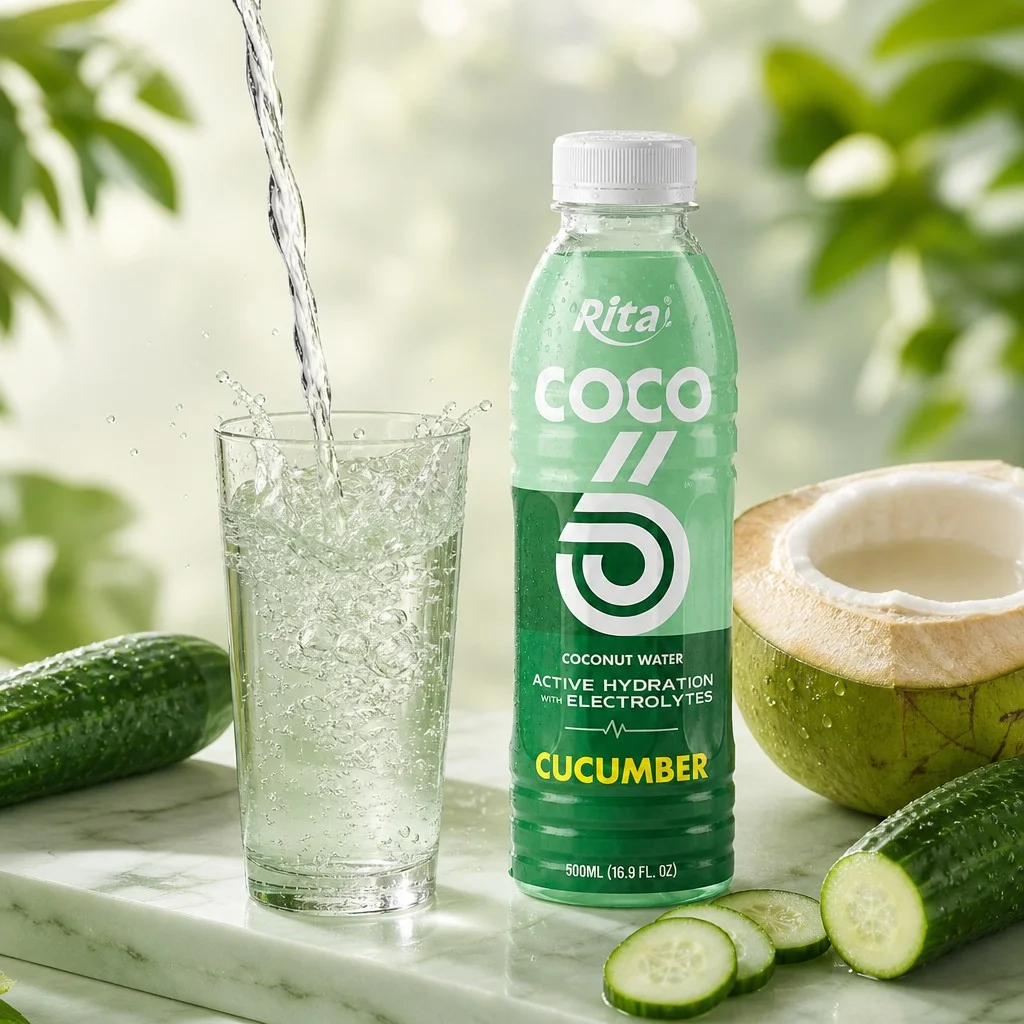
The formulation is anchored in a natural coconut water base, which gives the drink its familiar lightly sweet character, layered with a deliberately constructed electrolyte blend of potassium chloride, sodium lactate, calcium chloride and magnesium chloride. Cucumber flavouring introduces a cool, clean top note that separates the product from the run of conventional coconut water offerings on shelf.
Two specification figures define the drinking experience and the shelf presentation. A Brix level of 6.4±0.5 and a pH of 4.1±0.5 produce a lightly sweet, crisp profile — sweet enough to be approachable, dry enough to avoid the cloying finish that some reformulated drinks attract. The liquid itself is a pale, translucent green, visible through the bottle and consistent with the cucumber flavour cue rather than an artificial colour.
Packaging And Shelf-Life Considerations
Packaging has become a compliance topic in its own right. COCO Active Hydration is supplied in a 500ml PET bottle with a white cap and a minimalist green label that runs from light to dark green, carrying the large white 'COCO U' wordmark, the bold yellow 'CUCUMBER' flavour descriptor and the white 'ACTIVE HYDRATION WITH ELECTROLYTES' positioning line. The PET format is chosen deliberately: it is lightweight, impact-resistant and well suited to long container transit and multi-destination distribution.
Declared shelf life is 18 months when stored in cool, dry conditions, a window that gives UK distributors meaningful retail availability without compressing sell-through timelines. It also aligns with growing regulatory attention on packaging systems across Great Britain — recyclability expectations, packaging data reporting and deposit return schemes introduced or scheduled across different devolved administrations all push buyers toward formats that can be described clearly in the product file.
| Attribute | Specification |
|---|---|
| Product name | COCO Active Hydration Coconut Water with Electrolytes Cucumber Flavor |
| Brand | RITA Food & Drink Co., Ltd |
| Base | Natural coconut water with electrolyte blend (potassium chloride, sodium lactate, calcium chloride, magnesium chloride) |
| Flavour | Cucumber |
| Brix | 6.4±0.5 |
| pH | 4.1±0.5 |
| Volume | 500ml per bottle (16.9 FL OZ) |
| Packaging | 500ml PET bottle, white cap, minimalist gradient green label |
| Shelf life | 18 months when stored in cool, dry conditions |
| Certifications | BRC, FSSC 22000, ISO, GMP, HACCP, Halal Jakim, HCA-GCC, Kosher, SMETA |
RITA's Export Model And Why It Matters To UK Procurement
Procurement teams evaluating an imported coconut water with electrolytes are rarely buying a single SKU — they are assessing whether a supplier can hold specification across thousands of cases and multiple seasons.
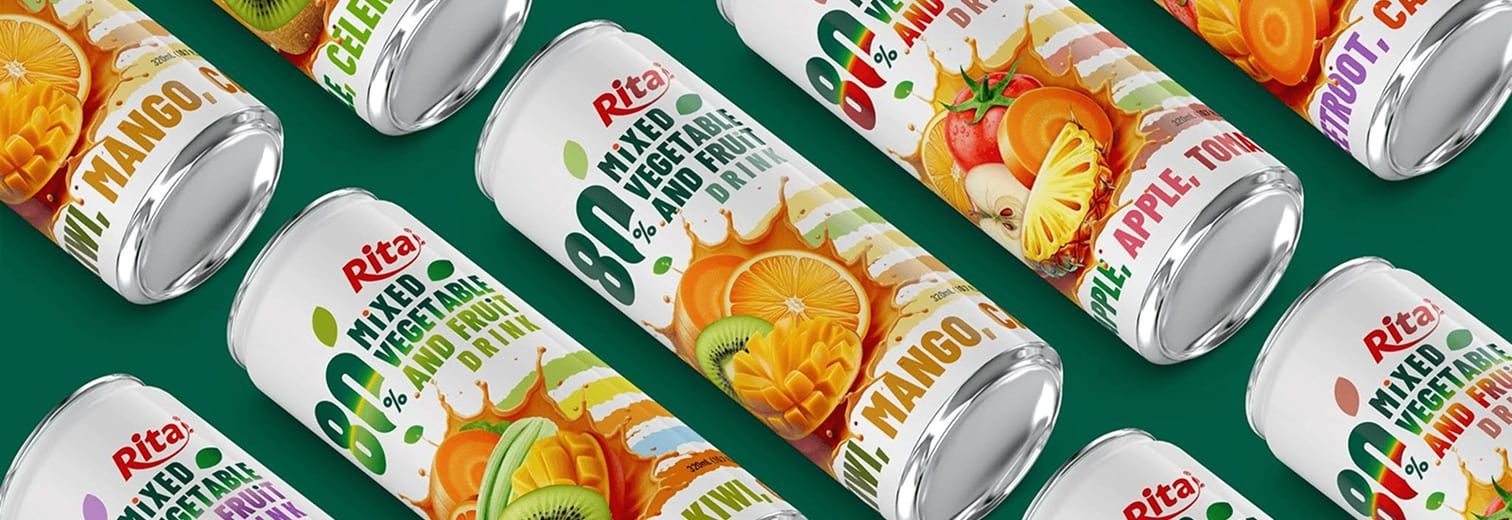
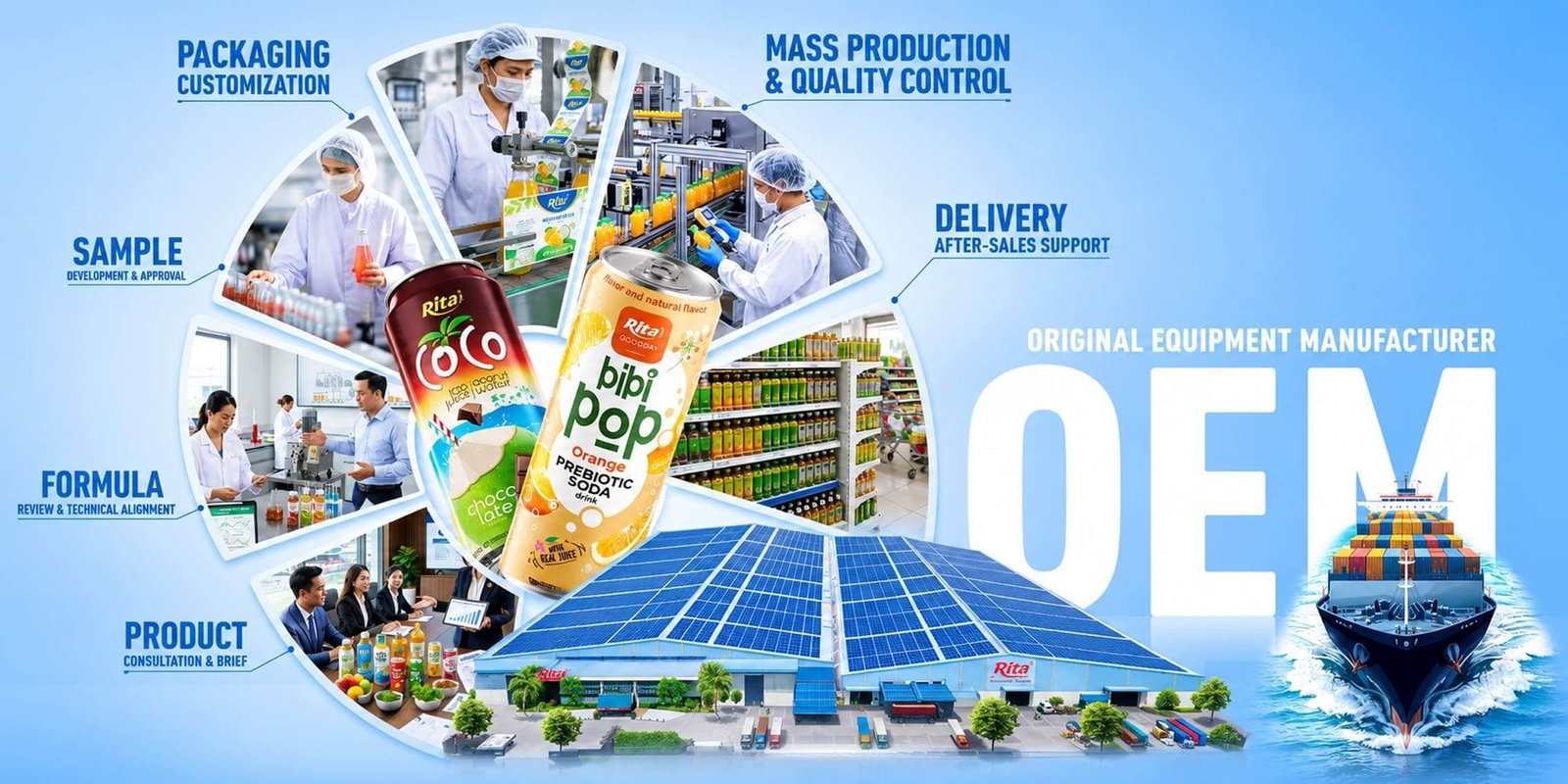
Founded in 2004, RITA Food & Drink Co., Ltd operates as an OEM/ODM beverage manufacturer with more than 50 automated production lines and exports in excess of 1,200 containers per month to over 200 countries and territories. For UK buyers, the practical relevance is capacity assurance: large-scale production combined with documented quality systems means the product delivered in month one can be reconciled against the product delivered in month twenty-four. Buyers seeking bulk supply or private label arrangements can review the manufacturer's OEM service programme and the ODM development route, both of which are structured around flexible minimum order quantities and multi-format capability across cans, glass, PET and PP.
The coconut side of that portfolio is covered in depth by the company's coconut products range, and UK-facing buyers can browse the full coconut water catalogue through the coconut water category on the British-facing site. Those two entry points matter commercially: they let a buyer see how many formats, flavours and volumes sit behind a single supplier before committing to a specification file.
From The Coconut Grove To The Retail Shelf
Traceability claims are only credible when the raw material story can be shown, and this is an area where the category is becoming more transparent. Supply chains for coconut water now reference specific growing regions rather than generic sourcing language, which gives importers something tangible to put in a supplier approval document.
The coconut plantations of Ben Tre provide a clear example of that sourcing approach, where the journey from grove to finished product is documented across cultivation, harvesting and processing stages. Ben Tre is widely associated with coconut cultivation in Vietnam, and references to a named growing region give UK buyers a concrete point of origin to verify rather than an open-ended sourcing claim.
A closer look at the growing environment is available in the manufacturer's coconut farm video coverage here: https://www.youtube.com/watch?v=I7hlTL3FT_0
Regulatory Signals Worth Watching Across The Drinks Industry
The wider British drinks market is generating a run of regulatory and strategic signals that will influence how imported beverages are evaluated in the next few years, even where they do not govern coconut water directly.
Danone's appeal against the Harrogate Spring Water expansion plan — alongside its commitment to invest in a benchmark Volvic site — is a reminder that water-adjacent categories remain highly contested territory for both regulators and retail buyers. Royal Swinkels' exploration of non-alcoholic wine opportunities reflects the same broader shift toward alternative beverages that is expanding what buyers expect from an import portfolio. Molson Coors' finalised production plans for the Sharp brewery signal continued portfolio growth in a market where consolidation and capacity decisions increasingly carry regulatory weight.
The most instructive example for coconut water suppliers is the Advertising Standards Authority's reprimand of Huel. It underlines a simple rule for the entire category: the more differentiated a product becomes, the more precisely its claims and descriptions must be documented. COCO Active Hydration's approach — specifying its electrolyte composition, its Brix and pH ranges and its flavour profile without layering on promotional language — reflects how export-ready suppliers are now preparing for that environment.
What UK Buyers Should Ask Before Signing A Coconut Water Contract
Commercial conversations are increasingly structured around verification rather than presentation. The questions below are the ones that separate a specification-led supplier from a brochure-led one, and they apply equally to branded distribution and private label programmes.
- Can the supplier provide current, unexpired certificates for every standard claimed in the certification list, including Halal Jakim, HCA-GCC and SMETA?
- Does the technical specification match what the pack declares — Brix, pH, electrolyte composition, volume and storage conditions?
- What is the documented shelf life, and what packaging format and storage regime support it?
- Can batch-level traceability records be produced for a named export consignment?
- What private label and OEM options exist, including minimum order quantities and lead times?
- How does the supplier support UK-side documentation, including importer information and packaging data reporting?
Suppliers who answer those questions quickly, with documents rather than adjectives, are the ones building durable positions in the COCO Active Hydration Coconut Water with Electrolytes Cucumber Flavor programme — and in the wider category of coconut water with electrolytes more broadly.
Frequently Asked Questions
What certifications does RITA hold for its coconut water products?
RITA Food & Drink Co., Ltd holds BRC, FSSC 22000, ISO, GMP, HACCP, Halal Jakim, Halal HCA-GCC, Kosher and SMETA certifications, covering food safety management systems, quality systems, dietary certification frameworks and ethical audit requirements.
What is the shelf life of COCO Active Hydration Coconut Water with Electrolytes Cucumber Flavor?
The declared shelf life is 18 months when the product is stored in cool, dry conditions. The 500ml PET bottle format supports that window and is selected for durability during international shipping.
How is the electrolyte blend composed?
The formulation combines a natural coconut water base with potassium chloride, sodium lactate, calcium chloride and magnesium chloride. The specified Brix level is 6.4±0.5 and the pH is 4.1±0.5, giving a lightly sweet, crisp profile with a cool cucumber flavour note.
Why is PET packaging used for this product?
The 500ml PET bottle with white cap is chosen for its impact resistance during container transit, its suitability for multi-destination retail distribution and its alignment with recyclable packaging streams relevant to UK packaging reporting and deposit return schemes.
Can the product be supplied under private label?
Yes. RITA operates OEM and ODM programmes for businesses seeking bulk supply and private label options, supported by more than 50 automated production lines and monthly export volumes exceeding 1,200 containers to over 200 countries and territories.